TOOT TOOT: That’s Me Blowing My Own Horn!

This post is part of ChicagoNow’s monthly “blogapalooza” series, where our community manager provides a writing prompt to all bloggers with the only rule being it must be published within one hour.  This month’s prompt:

“Write about a period in your life when you were at your best.”

Dammit.  This is a tough thing to consider today.  Not really where my head is at, you know?  But, a challenge is a challenge, so I will give this a go.

I remember October 2, 2011 vividly.  It was a beautiful early fall day in Chicago.  I was working part time at the Alzheimer’s Association in Chicago, right on Michigan Avenue.  I had gone back to work ten months earlier after the death of my daughter in 2009.  My profession was social work, but the kind of social work I did before my girl was diagnosed with cancer — working with older adults and their families in a retirement community, providing advocacy and counseling to elders and their families as they coped with aging and death — well, let’s just say that my head and heart were no longer able to do that type of work anymore.

An old acquaintance from graduate school was a VP at the Alzheimer’s Association and knew I was looking for work.  I applied to a position she had recommended me for.  It was a purely corporate type of gig.  Foundation work, not clinical in nature.  Part-time.  Creating training programs about dementia for paid caregivers and family members.  Full disclosure, it was never a good fit, but I appreciated getting out of the house, I liked my co-workers, and it helped me re-connect to part of myself that I had lost when our family moved to Cancerville.

At the same time I went back to work, I started my Mary Tyler Mom blog.  I was introduced to online writing through the CaringBridge page my husband and I co-authored through our Donna’s illness.  After Donna died, my husband stopped writing, I did not.  I came to realize how much I needed the words, the connection, the community.  I also came to realize I needed to write about more than cancer and grief.

Mary Tyler Mom was born.  The blog was named after one of my childhood icons, Mary Tyler Moore.  As a young girl, I always found her spark and independence so appealing.  She was gonna make it after all, you know?  And, I needed to believe in those early days of my grief, that I was, too.

The first six months of the blog had absolutely nothing to do with grief or cancer.  I trashed Gwyneth Paltrow more than once, in erudite and clever ways, and was celebrated with thousands of likes and shares.  People, it turns out, really dislike Gwyneth Paltrow.  My stomach literally turned when I realized that my clever quips gave other people permission to refer to this woman none of us knew personally as a cunt, a bitch, a whore.  I felt lost.  You see, I never revealed to my readers that I was a grieving mom.  Because I had decided Mary Tyler Mom was not about that, it was about working and raising children. And trashing easy to hate celebrities.

Pffft.

Right after my daughter’s would be/should be 6th birthday, I came out to my readers.  I introduced Donna to them.  Finally.  Timidly.  I revealed myself to you readers for who I was, a broken, grieving, sad,but hopeful mom.  I peppered anecdotes and memories of Donna in some of my posts, still feeling protective of how both she and my grief would be received, still worried that if I stopped trashing Gwyneth, people would stop reading.

In August of that year I approached my community manager at ChicagoNow, the same one who provided this damn prompt (thanks, Jimmy), with the idea to serialize Donna’s Cancer Story.  I pitched the idea of writing about one month of my daughter’s 31 months of cancer treatment each day over the course of September.  It was my effort to raise awareness for National Childhood Cancer Awareness Month.  I was worried how he would receive it.  I mean, 31 days of blogs leading up to the death of my daughter.  Not exactly good time reading.  Jimmy did not hesitate in his encouragement.  Literally.  Not a single second passed before he offered me whatever support I would need.

My pitch was naive, in that I didn’t realize what the process would be like.  Seriously, who on earth could I have known?

The month started with a “game on” kind of attitude.  The day before posting, my routine was to re-read the month’s worth of CaringBridge journal entries for the corresponding month.  On September 1, I read about the 30 days that started with Donna’s diagnosis.  I would then cross reference the thousands of photos we took of Donna during that same period of time, wanting to represent pediatric cancer both visually and through storytelling.  I would generally wrap up the entry for the next day around midnight or 1 a.m.
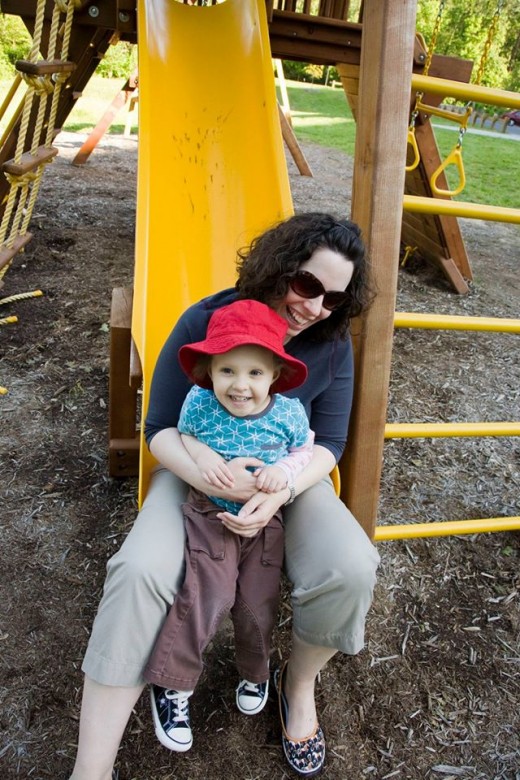
Mothering Donna, my happy girl.  What a glorious Donna Day this was.
Mothering Donna, my happy girl.

As the month progressed, this routine got harder.  I got more tired.  I stopped posting first thing in the morning, simply because the posts weren’t ready.  I started writing at 9 or 10 in the morning, instead of posting.  Again, as the days passed and my fatigue, both physical and emotional, worsened, there were days I didn’t write until my lunch hour at the office, posting later in the afternoon now.

The reader response to Donna’s Cancer Story took me by complete surprise.  People were reading the entries like a soap opera, as if I was purposefully generating cliff hangers, as if our life hadn’t been a cliff hanger for those 31 months of treatment.  It was wrenching and traumatic for me, writing Donna’s Cancer Story.  It was also, potentially, one of the greatest things I will have ever accomplished in my life, telling the story of my daughter, who would never be able to tell it herself.

Oh, Donna.  My dear girl.  I wrote Donna’s Cancer Story for you, for me, too, selfishly, to keep you near, to keep you close, to alert the world that you lived, that you existed, that you were amazing.  My life has changed because of you, and telling your story, sharing your life.

That day, October 2, was to be the very last entry in Donna’s Cancer Story.  The final post was an unexpected addition about how to harness and direct the outpouring of help that people wanted to provide after reading of our girl, my Donna.  Jimmy, my community manager, had also arranged for a live chat with readers.  I was so tech challenged that he agreed to come to my office and help me navigate it.  The response astounded me.  Floored me.  Humbled me.  It still does, six years later.

That afternoon, I opted to leave work early.  I walked out of the Mies van der Rohe high rise I worked in and out the door, heading to Chicago’s beautiful Millenium Park.  I walked amongst strangers, native Chicagoans and tourists from around the world.  None of them knew my story, none of them knew the sense of immense accomplishment I carried with me that day, as I enjoyed the warm sunshine.

When you bury a child, you no longer have the opportunity to parent them.  That day, October 2, 2011 I got to revel in a month of getting to parent my daughter again, by telling her story, not stopping when the pain and memories overcame me, honoring my daughter in a way that was worthy of her.  What a gift.

When Choosing Hope is Hard: Some Thoughts On Modern Life

These days . . .  they are hard.  Brutal days, for so many people.  Being gay isn’t easy.  Being black isn’t easy.  Being Latino isn’t easy.  Being Muslim isn’t easy.  Being a police officer isn’t easy.  Being a woman isn’t easy.  Hell, even being a Trump supporter isn’t easy these days.  Nothing seems easy these days.  We are angry.  So many of us feel angry these days, myself included.  It is exhausting.

When my daughter was going through her cancer treatment, my salvation was hope.  The trick, though, was in having to choose hope.  I learned quickly that when I chose hope, in whatever manner that presented itself, my life was made easier.  That active choice to hope, to believe, helped make my unbearable life bearable.  Hope guided me to savor the moments with my girl, to keep the focus on her, to believe we would be okay, despite the wreckage of cancer.

In my grief, choosing hope guided me, too.  In every way.  Hope allowed me to put my feet on the floor first thing in the morning, change diapers for my surviving son, find joy in places large and small.  Hope is what brought us to adopt our youngest son.  Hope is what allowed us to heal when our open adoption was closed.  Hope saw me through six months of illness with my Dad when there were days he was full of rage and vile insults, a cancer growing in him, changing him, that we had no idea existed.

Hope has been my religion, in a very literal sense.  An external structure, a faith, that provides support and comfort in difficult times.

These days, though, choosing hope is hard.  Really hard.

My son is a student in a Chicago public school.  There are constant threats of cuts, closures, and strikes.  Literally every day of his formal education has been a challenge on some level.  Gun violence in Chicago staggers the mind.  The numbers have a numbing effect.  We live in Illinois, a State that has existed without a budget for two years now.  Our elected officials spend more time blaming and posturing than governing.  Social service agencies that have existed and served vulnerable people for over 100 years are closing their doors and no one seems to care.

There has been great strife in my son’s school since January.  Grown adults acting like horrible, ill behaved children.  I have been the subject of rumors and mean girl campaigns that have had me in tears more often than I care to admit.  Acquaintances literally stop talking when I approach, then walk away.  Others challenging me with lies and accusations about me, not wanting to accept the truth I offer.  It has made me realize that if a community of local parents with a common interest can not make things work, why should we expect more from the politicians in our capitals?

I spend too much time on the Internet for professional reasons, and the imbalance skews me, perhaps hardens me.  There is so much outrage on the Internet, leaving not a lot of room for nuance.  There is an Old West “good guy” or “bad guy” mentality that develops.  People want to know and label where you fall on any number of issues.  We take one another’s temperature with close screenings of words and status updates that may or may not be accurate, then judge accordingly.  It is easy to become jaded and defensive.  Too easy.

Guns and rape and gorillas and religion and politics divide us.  I honestly have started to consider the possibility of a modern civil war erupting in the US, as it feels we are hurtling in that direction at an alarming rate.  So many of us seem to live in a place of fear.  We fear difference.  We fear violence.  We fear authority and the government.  We fear one another.  We fear guns.  We fear gun control.  As someone who lived in fear for two and a half years, I can tell you that it messes with you. Living in fear is not a healthy state of mind.  It changes you in ways that are potentially devastating.

This weekend a dear friend, in confidence, told me I was not handling myself well online.  That I was making myself a victim instead of listening to others who had been victimized.  Her words stung.  Still do, honestly.  I keep thinking about them.  This morning, wallowing in this sense of helplessness and hopelessness I feel, I appreciate that I feel victimized.  It’s no one’s doing.  It’s simply a consequence of living in the world today, feeling victimized, feeling powerless, living in fear. Allowing that fear, that sense of victimhood to bleed into my day-to-day, well, that ain’t cool.  It’s paralyzing and counterproductive and proof of an absence of hope.

Dammit.

So now what?  Now I have to work at choosing hope.  I have to try hard.  Then, I have to try harder.  I have to, perhaps, step away from online stimulation.  I have to take nature walks.  I have to play with my boys.  I have to dance.  I have to remember the people I love who have left me and the lessons they taught.  I have to believe. I have to find faith.  I have to go to the joy.  I have to remind the people I love that I love them.  I have to revel in the snuggles of my toddler and the clever of my young son.  I have to commit to change.  I have to use my voice.  I have to surround myself with art.  I have to read other people’s words, swim in their stories.  I have to appreciate a rain drop and a flower and the curve of a branch.  I have to pay attention.  I have to take care.

There is an artist from Kentucky that speaks to me.  Charles M. Laster, C.M. to his friends.  From the moment I first saw his art at an Outsider Art Fair in Harbert, Michigan back in 2009, in the days when my girl was still alive, but we knew she was dying, his art moved me.  I have felt, in looking at his work, that he is a fellow traveler in life who sometimes stumbles, but whose hope keeps him going.  His art is eternally hopeful, I think.  Today, in the midst of my wallow over Orlando and Stanford and Chicago and all places touched by violence, I glanced at a piece of his art I was lucky enough to purchase this winter.  This is it:

The back of this piece says, "If the little creatures can find a meal always, you will also be fed.  Always.  Believe."
The back of this piece says, “If the little creatures can find a meal always, you will also be fed. Always. Believe.”

C.M. reminds me to believe.  To believe is my responsibility, one that, I hope, leads to a better quality of life.  One that allows me to raise my sons to be kind and compassionate men.  One that allows me to power through times of uncertainty.  One that allows me to forgive and ask for forgiveness, whatever is called for in any given moment.  One that I can breathe and sleep and experience and live.

I needed a sign today, a reminder to hope, to choose hope.  I found it on my bookshelf.  I am grateful.

The Dao of Da: “That’s What Bumpers Are For!”

This is the second in an occasional series where I will try and capture some of the life lessons my Dad (Da to his grandchildren) taught me through the years, the goal being to preserve them for his children, grandchildren, nieces and nephews. 

Lesson 2:  “That’s What Bumpers Are For!”  

My Dad loved to drive.  Loved it.  He was proud of his driving abilities, enjoyed the independence a car symbolized, and had a knack for finding used Cadillacs being sold by little old ladies who only drove their Sevilles and DeVilles to church on Sunday mornings.  He spent most of his working years in the railroad and public transit.

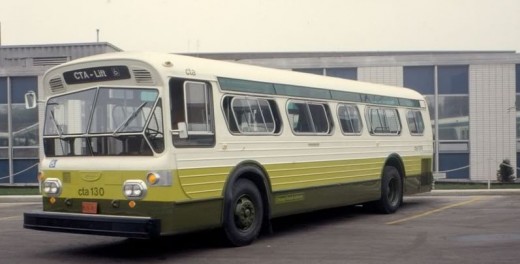
When I was an itty bitty little girl, my Dad drove a bus in Chicago for a short while.  One summer day, much to the surprise of the entire neighborhood, he pulled up in a city bus in front of our suburban home.  Kids across the neighborhood packed onto that bus for the joy ride of their five and six and seven and eight year old lives. Liability be damned.  Aaaahhh, the 1970s were an awesome time to be a kid.  My Dad was a certified hero that day.

CTA bus, or 1970s childhood fairy tale?

The truth is, I have dozens and dozens of stories about my Dad and transportation.  It was his jam, you know?  After my Mom died and he began his life as a bachelor, his walls were littered with framed prints of steam engines, buses, trains, carriages, depots.  Going places and how to get there were matters of great interest to him. There was not a neighborhood in Chicago he couldn’t drive through with authority, maps an unnecessary nuisance to him.

While it was a high school gym teacher that taught me the specifics of driving, watching my Dad throughout my lifetime provided the nuances of driving.  He added the art to the science.  After I moved to Chicago in my early 20s, my Dad gave me a lesson on parallel parking.  To this day, I think of his instruction every time I put my car in reverse.  It was all about lining up the backseat passenger window with the rear winshield of the car in front of the spot you wanted.  “Cut the wheel and don’t be afraid to tap the bumpers — that’s what bumpers are for!,” he would exclaim, frustrated by my initial timidity.

Twenty some years of living in the city has erased any timidity I had in those early days of city driving.

I can recall, with great clarity, watching my Dad fit into tight spaces with literally one inch on either side of his bumper.  And he always drove old boats, none of these foreign compacts.  Cadillacs and Crown Vics were his style.  I still marvel at the experience.  How did he do it?  It was as if a magnet had gently pulled his car into the seemingly too small spot.  But you know how he did it?  He tapped those damn bumpers, that’s how he did it!  Why?  Because, “That’s what bumpers are for!”

Of course.

Equal parts white man entitlement and total confidence (perhaps those are one and the same?) are what got my Dad into those tight spaces.  He was always a bit of a bull in a china shop, uncareful and uncaring of what damage might occur due to the space he took up.  It was his space to take, you know?  He and his Cadillac were entitled to that space, dammit (thought he would never swear, but that’s another post).  Now, mind you, that didn’t mean ripping apart or damaging those cars that straddled his parking spaces, but it did mean that they would get close and personal with his bumper.  Those bumpers were all up in one another’s business.

Da had three daughters, all of whom have grown into strong women, both in temperament and accomplishments.  He wanted the same things for his daughters as he did for his son — to know their place, to own their place, to push boundaries, to not always cede to authority (except, of course, his authority) which, as it turns out, is a lot like tapping bumpers to ensure you get your space.

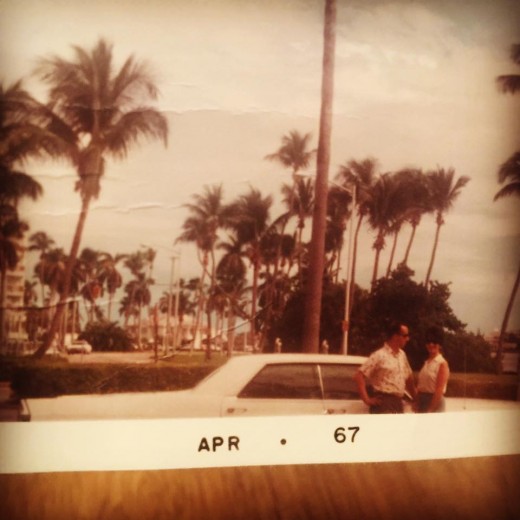
A man, his bumper, and 2 of 3 daughters.
Da, his bumper, and 2 of 3 daughters.

His message to us, in driving and in life, was to not be afraid to tap those bumpers — push for what you want, what is possible, what is available to you.  Don’t be restricted by the idea of something, don’t hesitate because you worry you won’t make it, don’t stop yourself without trying.  Make it happen, carve that spot out for yourself, use your resources, tap those bumpers.  Bumpers are meant to bump, it is their function.

It’s a worthwhile lesson, both in and out of the car.  Thanks, Da, for helping me always find my space.

Da and my Mom.  You don't ever parallel park a car this long without tapping a few bumpers along the way.
Da and my Mom. You don’t ever parallel park a car this long without tapping a few bumpers along the way.