The definition of “hole” is that of an empty space, a hollow place. I know from holes, as my heart has quite a few of them. Plus, I live in Chicago, so my winters are spent swerving to miss driving through potholes. Those holes suck. And one of the best pieces of writing I’ve even done was about a metaphorical hole. It won an award and everything. (You can read about that hole HERE.)
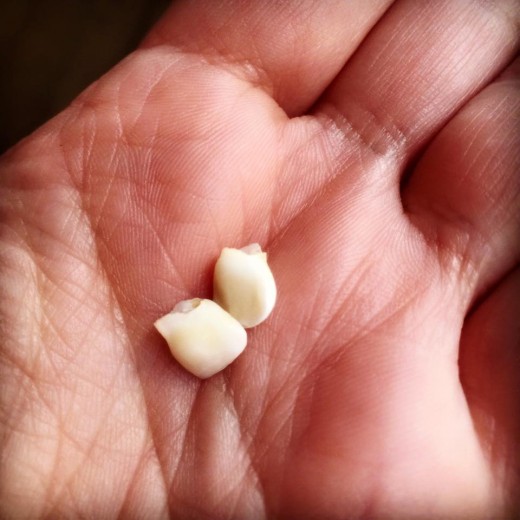
These days I am in love with a hole that happens to be smack dab in the middle of my older boys’s face. He lost his two front teeth within a few days a couple of weeks ago. I am inexplicably charmed by his new smile. It is glorious, that hole in the middle of his mouth. I look at it and melt into a puddle of warm motherly goo each and every time I see it. There is so much to celebrate about that hole.
That hole means that everything is working as it should inside my boy’s body. Baby teeth are falling away, adult teeth are preparing to make their debut.
That hole means that I mother a seven year old. My boy is three years older than his older sister will ever grow to be and all indications are that he will keep getting older.
That hole means that I get to marvel at one of the wonders of human development each and every day for the next few months while the new teeth descend.
That hole means that things like pudding and noodles and cheese get squeezed through places they do not normally go. This is simultaneously disgusting and hilarious.
That hole means that I have a visual reminder each and every day with each and every smile that my boy is growing up and conquering new milestones.
That hole is a symbol of my son’s deep pride in growing older himself. He may moan and groan a bit about how hard it is to eat certain foods (“Can you slice this apple, Mom?”), but, just like me, he is thrilled to be changing and getting older.
Yes, I am the odd mom that holds on to her kid’s lost teeth. And, no, I have no idea why or what I will do with them.
I love my boy. Somehow, without even knowing it was possible, I love him more without those two little enamel pieces of himself. I love his Vampirish grins and the silly games he plays at the dinner table with his food now. I love how when he smiles up at me I am still surprised to see the gummy black hole that takes up so much space. I love how he explains to his toddler brother that he, too, will lose his teeth someday. I love it all.
Motherhood can be a heartbreaking kick in the teeth (pun intended) some days, but these days, seeing that hole in the middle of my kid’s head, it just fills me with hope and gratitude.
I live in Chicago, one of the most racially and class based segregated cities in America. Knowing this, and loving this city despite its deep flaws, when we purchased a home, my husband and I opted to find a neighborhood that was diverse, both economically and racially. It was no easy feat.
When we started raising children together, including one that came to us through adoption, the racial divide was seen in a stronger light. When you adopt, part of the process is sitting down and considering who to adopt — a sick child? a foster child? an older child? an African American child? a Latino child? a biracial child?
I can’t lie — having to provide an answer to those kinds of questions is like putting a magnification mirror right on up to your heart and conscience. Answering those questions also forces a discussion about race that many folks might never engage in through their lives. But why? Why don’t we talk more about race in America? I think the honest answer is because it is hard. Really hard.
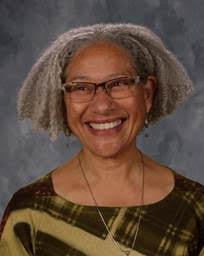
Recently, I had the opportunity to interview Dr. Jean Robbins, Head of the Early Childhood Division at Catherine Cook School in Chicago, who has expertise in this area. If you want to talk about race and children, this is your gal. Dr. Robbins has developed a six point list of tips about how to address the subject with young children. I find her tips to be concrete, accessible, and easy to implement. Here they are:
TIP 1: START EARLY
By the age of 3, children are noticing physical differences among people, including skin color. Many parents cringe when children (loudly) comment about these differences, when they should instead, very matter-of-factly, open up the discussion and know that their children can handle its complexity. For example, parents can simply explain to children, “an African American is someone who usually has brown skin and has great-great-grandmas or grandpas who came from Africa. All of our families came from a different country at some point!” Parents should also be aware that children can be very literal when it comes to race, so anyone with brown skin might then be African American to them.
My Son’s hand atop the hand of his part-time caregiver.
TIP 2: DO NOT SHY AWAY
Many parents are afraid to say the wrong thing, so they avoid conversations about race, but their silence sends unintended messages to kids. Silence tells kids that there is something wrong with or negative about people of color. Talking about race, on the other hand, stimulates curiosity and minimizes fears about race.
TIP 3: DRAW THE BIGGER PICTURE
There are daily opportunities to celebrate diversity and there is no need to wait for Black History Month. For example, taking your kids to museums, restaurants and cultural events across the city, or, watching movies and reading books about children from other cultures are all ways to increase awareness. Some museums, libraries, and cultural institutions offer free informative events for families during Black History Month.
TIP 4: BROADEN THE LESSON
Children like to learn about topics as they relate to their own lives. By framing American history around ideas of conflict, fairness, and sharing, even young children can understand lessons about any historical period. Keep it simple, but be accurate and honest. For example, maybe you pose a question to your child: “People who owned slave didn’t want to do the hard work and didn’t’ share the money with the slaves. Do you think that was fair?” This will open up broader discussions and encourage critical thinking.
TIP 5: MODEL LEARNING
Parents are examples for their children, and can be models of learning and curiosity. It is okay for parents to admit when they do not know something, and then suggest to their children that they find out together. Parents should not be afraid to say, “let me think about that” or “I’m not sure, let’s find out together!” A family visit to the library is a great way place to start.
TIP 6: ENCOURAGE SELF-EXPLORATION
We all bring diversity in one sense or another. Parents and teachers can encourage students to explore their own identities and reflect on what they learn about themselves. At Catherine Cook School, a Diversity Committee composed of parents, teacher, board members, administrators and staff members work together to integrate diversity themes, topics and activities into the curriculum starting in preschool. Together, we can teach children about their cultural and ethnic identities, even through cultural traditions such as cooking or the clothes we wear.
After our conversation, I was struck by just how rare it is to have a discussion solely about race, especially with someone of a different race. We need to change that.
One thing that struck me in our conversation was hearing Dr. Robbins acknowledge that for children, it can be hard to make the right choices — hard to share, hard to include all children, hard to always listen to our parents. It is the same for us as adults. It can be hard to always do the right thing or make the right choices. There is a parallel process there that we should not discount. Discussion about race and acknowledging differences are hard, but so very valuable in the long run. From Dr. Robbins, “I’m the same. My experience is different. What is the sweet spot where we can connect?”
“Children will yell out. ‘You are black!’ ‘Why is your hair so fuzzy?’ It will frighten teachers and adults. But they are celebrating words and language. Encourage them to express their curiosity. Children notice reality.” Amen. Don’t assume, for whatever reason, that there is no reason to discuss race with your children. As Dr. Robbins suggests, “Be ready to talk. Ask questions, guide conversations, provide experiences, read books. There is no excuse for not accessing materials about others.”
Dr. Jean Robbins has been the Head of the Early Childhood Division at Catherine Cook School since 2007, and has established best classroom practices, curriculum and supervision measures to make the school a leader in high-quality early childhood programming. Dr. Robbins holds a doctorate in Child Development from the Erikson Institute, an M.B.A. from Columbia University in New York and a Bachelor’s degree in Psychology from Smith College. Before coming to Catherine Cook School, she worked as a researcher on a variety of studies, including a national home-visiting program, an early childhood teacher preparation and diversity study in the U.S., and an early literacy and play study for Yale University. Dr. Robbins also served as Director of the Parents as Teachers First program at Chicago Public Schools, which was a citywide early childhood home visiting program.
There was a time in my life, not too long ago, actually, when every day was Donna Day. Every day revolved around caring for our little girl with cancer. If it weren’t medical procedures, clinic visits, or home health nursing visits, it was time spent showing Donna what a wonderful, beautiful place the world was. At the heart of all of it, though, was Donna and her cancer.
When you are parenting a child with cancer, cancer is always there. Always and in all ways. It never goes away. Six years after her death, Donna’s cancer still stays with us. Freaking cancer. But, truth be told, six years after her death, not every day is Donna Day anymore. Some days she is more present for me than others.
July 20 will always mark Donna’s birthday. October 19 will forever be the calendar date that Donna died. Holidays like Christmas and Halloween — those most closely associated with children — will never not be about Donna, despite her absence. First days of school are a reminder of what grades Donna will never attend. This past September it was 5th grade.
The first year our family hosted a St. Baldrick’s shaving event to raise money for pediatric cancer research was 2012. Donna was very present on the Internet that spring, as I had cataloged her cancer story just a few months earlier. Strangers near and far had come to know Donna and the toll that childhood cancer can have. Strangers near and far also came to love Donna, a wee little girl they had never met. The Internet embraced Donna’s story in a way that still impacts my day-to-day life.
In the five years we’ve been fundraising for St. Baldrick’s, generous shavees and donors have raised over $373K dollars to help the researchers dedicated to finding cures for pediatric cancer. That astounds me. Donna has inspired so very much.
One of the fundraising tools I have used each year is an annual Donna Day. Today is Donna Day. It is the one day a year — the actual date changes from year to year, that I ask fellow bloggers to use their voices and platforms to tell Donna’s story and share links to our St. Baldrick’s event. The goal is for people to read and give. It is so simple — read, feel, give. I am humbled, annually, by the number of bloggers who will to do this and the number of dollars raised by this collective plea to right the wrong of underfunding for pediatric cancer.
This year, I am feeling reflective, though, to that time in my life when more of my day-to-day was spent in the presence of Donna. Her sweet face, her silly nature, her graceful fingers, her lips and fingers sticky with grape jelly that she liked so much. When Donna Day wasn’t about raising money or helping fund cancer research, but about really experiencing every moment of Donna that I could, knowing full well that those moments would very likely be limited.
A friend of ours is a very talented photographer. Twice during Donna’s illness Anne came to be with our family during such difficult times. She just jumped right in, camera in tow, helping us and capturing our girl. I could not know it at the time, but the images she captured — those frozen moments in time with Donna — are a gift I will never be able to convey my gratitude for. Donna’s crooked smile is on film. The little dimples in her small and delicate hands are captured. The look of determination in such a small face is something we can look at again and again now because of our friend, her eye, and her camera.
These images (all courtesy of Anne Geissinger) are from a couple of Donna Days in the spring of 2008 when we were living in Bloomington, Indiana. At the time, the only proton radiation facility in the Midwest was located there (it has since closed). Our little family picked up stakes and lived there for three months, Mary Tyler Dad straddling Chicago and Bloomington both. Donna was at home there. She was such a chipper and adaptable kid. Our routine was wake up, rush to the proton center, get sedated, get zapped, wake up, eat, then spend our days in the welcoming little city of Bloomington.
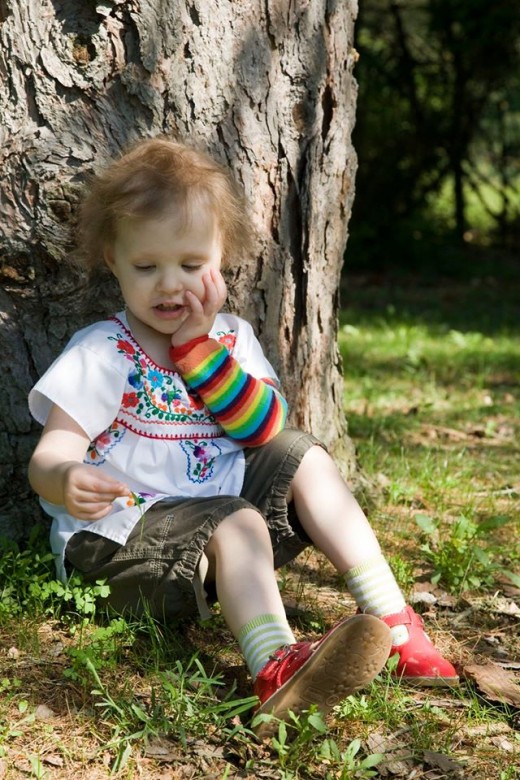
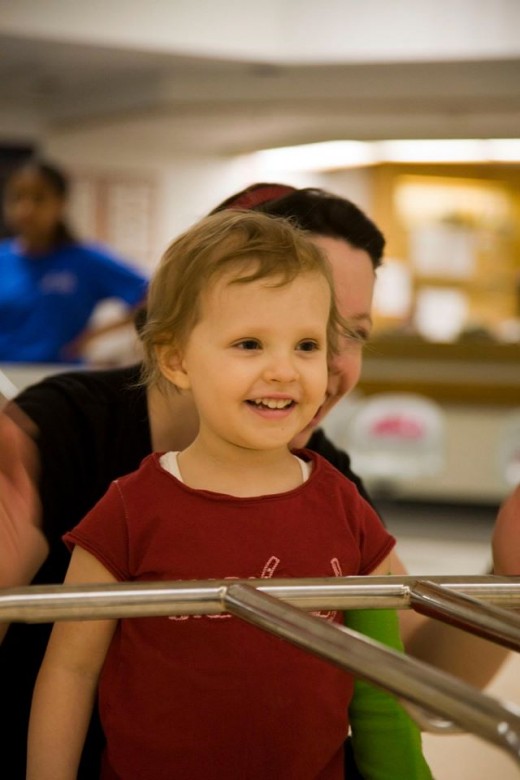
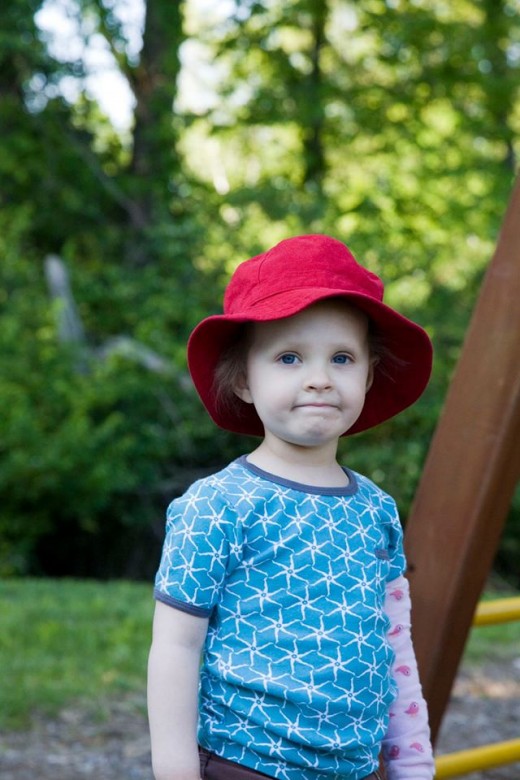
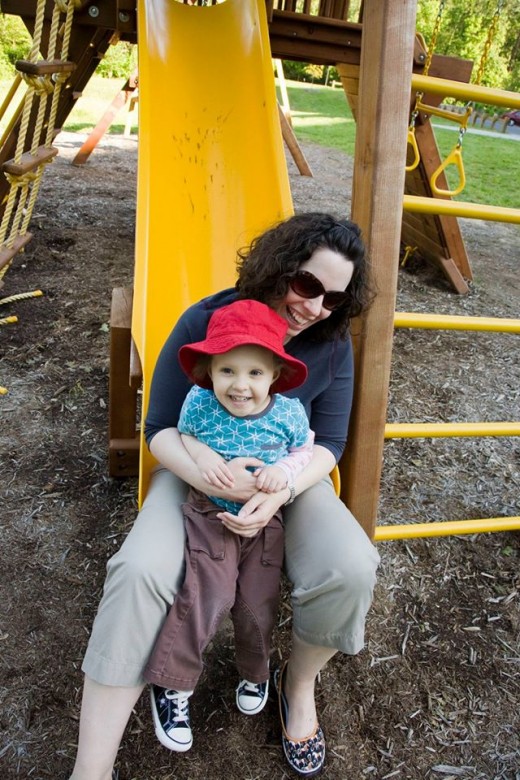
Donna being so very Donna. Sitting under a tree, thinking. She is wearing a combination of cargo shorts and a delicate floral top. And red mary jane shoes. Always red mary janes.Donna and I at the IU bowling alley. We only went a few times, but Lordy, that girl loved to bowl. She had so much fun watching the heavy ball roll, roll, roll, and, hopefully, hit a few pins. It made her so happy.Do you see the dimples in her hands, just above her fingers? Donna never lost all of her baby fat. Her little hands always retained their baby grace.Donna’s crooked smile, her knowing grin and wise eyes. This captures my girl so very well. And the red hat. Always the red hat.Donna’s scar. It was called a “hockey puck” and the doctors tried to cut into it with each surgery, so as to prevent new scars. It helped that her tenacious tumor always grew back in the same place. The radiation was centralized there during our weeks in Bloomington, so her hair would never grow back in this area. I am grateful it was in a place she could not see. When she looked in the mirror, Donna saw Donna.Mothering Donna, my happy girl. What a glorious Donna Day this was.
I am grateful for today’s Donna Day reminding me of those Donna Days I treasured when our girl was still with us. Cancer was our girl’s fate, and I know and accept that. But still, I will continue to push for a different fate for children now diagnosed with cancer and those who have yet to be diagnosed. Researchers need better options than adult chemo regimens that are 20-30 years old.
Please consider making a donation, TODAY, Donna Day, in memory of this sweet girl who inspired so much and still, somehow, keeps inspiring.
If you are local to Chicago and want to shave you head, sign up HERE.
If you can’t shave, but want to help find a cure for childhood cancer, donate HERE.
Thank you, sweet readers, for indulging me yet again as I grieve and advocate.







 Mary Tyler Mom