How the Childhood Cancer Community Gets It Wrong

It’s happening again.  The childhood cancer community, a group I am both honored and sorrowed to call myself a part of, is getting it wrong again in a very public way. National news outlets are now reporting on what I have seen on my private Facebook feed almost immediately after the announcement — sour grapes over Caitlyn Jenner receiving the ESPY Arthur Ashe Award for Courage rather than our own community’s Lauren Hill.

For those of you who don’t know (those of us in the childhood cancer community require no introduction), Lauren Hill was a 19 year old college basketball player at Ohio’s Mount St. Joseph who died of one of the most vicious forms of pediatric brain tumors, DIPG, on April 10, 2015.  Diagnosed shortly after her 18th birthday, Lauren inspired thousands with her courage and selfless focus on the importance of research for other children, knowing full well she herself would not benefit, as DIPG remains a terminal diagnosis. Before her death, Lauren directly inspired over $1.5 million in donations, and that number has risen significantly after her death.
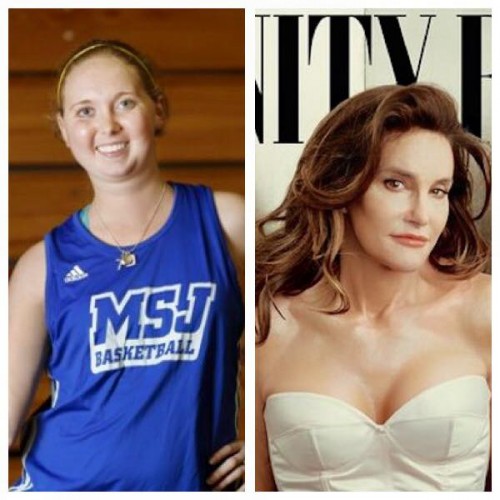
Lauren Hill and Caitlyn Jenner.  Does one of these women have the corner on courage?
Lauren Hill and Caitlyn Jenner. Does one of these women hold the corner on courage?

There is absolutely no question that Ms. Hill demonstrated extraordinary courage in how she lived with cancer.  She represented the best of humanity at a time of tragic loss for herself, her family, and her loved ones.  Her selflessness inspired those within our community and a national audience to better understand the need for research and learn how severely underfunded pediatric cancers are within the larger world of cancer research.  I salute her and remain awed by her grace.

And while this may be presumptuous to say, every indication is that Lauren would be ashamed of the childhood cancer community’s response to the ESPY award announcement.  Like petulant children, I have seen countless activists bemoan Jenner’s selection for a courage award, demanding that Lauren be recognized for her clear superiority over someone who undergoes elective surgery.  The rhetoric has been shameful, though most of it is couched in politically correct terms so as to ensure everyone knows that the childhood cancer community fully supports the struggles of the transgender community.  Those disclaimers and assurances do little to demonstrate empathy for a condition that results in up to 46% of transgender or gender non-conforming individuals  attempting suicide.

Please.  And enough.

This is not the first time the childhood cancer community has created a public ruckus in response to something they disapprove of.  Last summer it was the ice bucket challenge for ALS.  For weeks I read blogs and saw angry status updates from Cancer Parents about how ALS was getting the support and recognition that our children with cancer should have.  Like with Jenner, the unspoken suggestion is that childhood cancer is worse — worse than ALS, worse that gender confusion, worse than any cause or effort that eclipses our own.

It is shameful to me, and embarrassing.  The childhood cancer community is acting in ways that, I hope, we as parents would discourage in our own children.  If siblings were squabbling about not getting enough of this or that or things within the family not being perfectly equitable, our parental instinct would be to shut that s&%$ down.  We can recognize that behavior as petty and immature and demand it stop.  And yet, somehow, we cannot see it within the larger childhood cancer community and how we harm our cause by engaging in it ourselves.

It is time to stop the nonsense, the petty behaviors, the entitlement.

For that to happen, though, some hard truths need to be addressed.  The childhood cancer community has no singular focus to rally around.  There are many charities doing outstanding work on behalf of our children.  I am honored to know some of the major players in the arena and, like with Lauren Hill, stand in awe of their efforts.

But not everything is rosey.  As the mother of a daughter who died of an aggressive brain tumor, I have had other Cancer Parents ask why our family supports the work of St. Baldrick’s, given that their efforts are not exclusive to pediatric brain tumors.  The suggestion is that the $365K+ our events have raised for research is somehow being misappropriated because it is not specific to childhood brain tumors.  And, yes, people actually say this to me.  The truth, from the mouth of our own beloved Dr. Stew, Donna’s oncologist and a renowned researcher, is that were we to donate $50K for research with the requirement that it be specific to Donna’s type of cancer, papillary meningioma, he would have to refuse it, as Donna’s cancer is not even being researched.  How about them apples?

Perhaps the hardest truth of all is that our children with cancer have become symbols for folks wanting to feel connected to the next feel good story of the year.  This month a documentary about Bat Kid will be released.  You remember Bat Kid, right? Huge swaths of San Francisco shut down in November 2013 to accommodate the wish of young Miles Scott, a beautiful little boy diagnosed with leukemia, to the delight of an international audience who monitored the day via almost half a million tweets covering the events.  The documentary is described as “humorous and touching.”  Ouch.

1 in 5 children diagnosed with cancer will die of their disease, 1 in 2 children diagnosed with a brain tumor will die, and yet documentaries are being released that focus on the “humorous and touching” aspect of pediatric cancer.  We allow that.  Hell, I think our childhood cancer community, to a certain degree, encourages that.

I have said it before and I will keep saying it.  We need to center and focus on one thing:  research.  R-E-S-E-A-R-C-H.  Our government is not helping, the pharmaceutical companies are clear that there is no profit in devoting resources to childhood cancer, so they will not help.  We must do it ourselves, as no one else understands.  But we do not help our cause or our children by public displays of entitled, petty behaviors that cast stones on the hard work of other diseases and disabilities.

As the mother of a child who died of cancer, I understand the pain and frustration we all feel.  We shout and we shout and we shout and our efforts don’t always have the impact we wish they did.  This public nonsense, I realize, comes out of both exasperation and fear that our children will be forgotten.  I live with that very real fear every day, so I understand, but it is no excuse.

We must stop the petty, immature, entitled behavior and remain focused on research. Period.

I have a lot of strong opinions.  Think of me as the kinder, gentler Matt Walsh.  Want to subscribe?  Here’s how:

Type your email address in the box and click the “create subscription” button. My list is completely spam free, and you can opt out at any time.

A Letter to My Sons on Mother’s Day

Hey Boys,

Sunday is Mother’s Day.  I know this because I have been to the mall three times in the past few weeks (through no fault of my own).  You can’t walk past a single shiny window without being bombarded with the certain way to make your mother happy come this Sunday morning —  BUY THIS.  Mom needs that.  IF YOU LOVE HER, YOU WILL SPEND A LOT OF MONEY ON HER.

MD1

MD2

MD3

Rubbish.

I wanted to let you know you are absolved from having to purchase me some or other fancy gift to commemorate this day.  You are young now, but I don’t want you growing up thinking a day like Mother’s Day is all about the bling, the shine, the bows, or the boxes.  It’s not.

A new Coach bag is not the thing that proves your love for me. I don’t need or want diamonds or a tote filled with nine scented candles.  A spa day away is lovely, to be sure, but don’t believe for one moment that I deserve that for mothering you.

I won’t speak for all mothers, but I will speak for me.  Raising you two is my honor, my joy, my sacred duty, my gift to the world.  If I do it right, you will grow into kind, compassionate, empathic, loving, productive citizens.  If I do it wrong, and know that I will make many, many mistakes along the way, well, I am sorry.  When you’re all grown up and shaving, I hope I can say I did my best.

Mothers don’t need stuff or things from their children to understand they are loved.  I see it almost every day from you two.  When you fight with one another for space on my lap while sitting on the kitchen floor.  Swoon.  When you follow me around my Dad’s wake with a box of Kleenex, just in case I start crying again.  Sigh.  When you grab me by the scruff with your not yet gentle toddler ways to pull me in for a kiss. Ouch, followed by Melt.

I know you love me.  Giving me something that a shiny store window tells you I need doesn’t ever mean that you love me more or better.  Never get things confused with feelings.  Believe me when I say it is enough to be loved by you.

And this is not me being a mommy martyr.  It’s a lesson I am trying to teach you both that things, fancy and expensive things, are never to be confused as compensation for caring for you.  I am all for gifts and symbols of your love and affection for me, but those gifts and symbols need not have dollar signs around them, your love and appreciation measured like a litmus test by how fancy the packaging is or how much your Dad shelled out.

This year and every year, if you want to treat Mother’s Day as a special day for me or an opportunity for you to show your appreciation, I will welcome your efforts with open arms.  Please, in fact, do!  Everybody loves days set aside where they get to feel special and loved.  Like birthdays or holidays are for you.  I am no different.  I would love a special day where I feel your love and appreciation in extra measures.  There are so many meaningful ways to show your feelings that don’t involve money.  Think about that.

Alright, kiddos.  That’s my lesson for the day.  I love you.  I know you love me, too. How lucky are we?

xox, Mom

Cancer is Not About Winning or Losing, So Let’s Change the Narrative Already

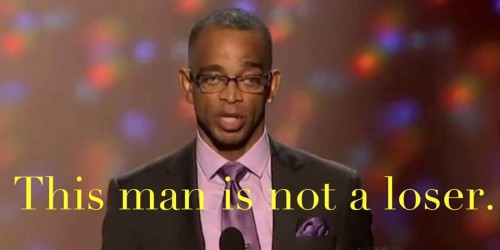
Throughout the day, anytime I dipped into a few minutes of the Book of Face, I saw status posts and articles about an ESPN anchor, Stuart Scott, who, at 49, had just died of cancer.  I had never heard of Stuart Scott before this morning, but now, twelve hours later, he is one of my heroes.

People all over the media are reacting to a few choice words Mr. Scott had about cancer at last summer’s ESPY Awards.  “When you die, it does not mean that you lose to cancer.”

Amen.  Preach.  Can I get a witness?

Those words were spoken by a man who described himself as “battling” cancer.  Here he was, on stage, accepting a prestigious award that he himself acknowledged he didn’t feel worthy of receiving.  This man is fit. Handsome.  I mean handsome.  Determined.  Articulate.  Focused. Inspiring and inspired.  Everything about him shouts vitality.  He appears healthy, at the top of his game. And yet, cancer.  He was living with and dying of cancer, even if it didn’t look that way.

There is no shame in that.  There is no shame in dying of cancer.

Stuart Scott

One does not “lose a battle” with cancer.  Fuck that noise.  The mere idea of it is insulting and dismissive and diminishing to every single person who lives and dies of cancer, and yet this is the preferred verbiage we as a culture have somehow agreed best describes whether an individual, man or woman, adult or child, survives their cancer diagnosis.  Again I say, fuck that noise.

It makes my skin crawl every time I see it or hear it, and having been a part of the cancer community since 2004, I see it and hear it way too damn much.  I’ve written about the subject before, gotten in Facebook tussles over it with friends I greatly admire and respect, and even sent letters to reporters asking them to rethink their language, knowing and believing that words really do matter.

If some people “win” their battle with cancer, if some folks “beat” cancer, it stands to reason that some people “lose” their battle with cancer. Where there are winners, there must also be losers, following that logic.  And that is the concept I reject.  People unlucky enough to die of their cancer diagnosis are not losers.

Stuart Scott went on in his speech to say:  “You beat cancer by how you live, while you live, and in the manner in which you live.”

That is some profound wisdom right there and could apply to most anything in life.  We all “beat” challenges XY or Z that are assigned to us in life by how we approach those challenges, how we cope with those challenges, and how we proceed in our life amidst those challenges.  This is true of cancer or whatever that challenge might be.

Two of the people I have loved most dearly on this earth have died of brain cancer.  My mother and my daughter, my Donnas.  Neither of them lost their battle with cancer.  When my daughter initially responded so positively to the hardcore chemotherapy regimen she endured, she was not more of a winner than she was when her cancer fate turned and she became terminal.  When my mother had the misfortune of having the tumor in her head (the one no one knew existed) bleed out as she played a slot machine in Biloxi, Mississippi, she did not become a loser, and there is nothing, not a damn thing, she could have done to “beat” her cancer diagnosis.

If two children are diagnosed with cancer on the same day, one with leukemia that has a 90% cure rate and one with DIPG that has a 100% mortality rate, the surviving child is not a winner, just as the child who dies is not a loser.   That child who survives her diagnosis did not “beat” her cancer, so much as survive her cancer.  The nuance there is crucial to understand.  Both children, no doubt, would have tried to cope with the brutal treatments they endured in the name of cure and both children, no doubt, demonstrated bravery and strength throughout their treatments.

Stuart Scott detailed this brilliantly in his ESPY Award speech.  Rather than romanticize his cancer “battle,” Mr. Scott shared details about how tough cancer treatment is.  How long hospital stays can be.  Tubes and wires popping in and out of every part of his body.  The fatigue.  The inability to fight some days.  The dependence on others.  The inability to plan.  The tears that come, even when you’re a 49 year old national TV sports anchor.

I honestly think I fell in love with him watching his seven minute acceptance speech.

Many, many, many people die of cancer.  They are not “lost” to cancer and their dying does not make them “losers” who “gave up.”  They are people who have experienced the misfortune of receiving a cancer diagnosis that was not responsive to treatment.  As heartbreakingly simple as that.

I applaud Stuart Scott for the bravery he displayed in just speaking the truth — not his truth, but the truth.  People in cancer treatment, no matter the age or diagnosis, are faced with incredible challenges and the vast majority of them face those challenges — the pain, the illness, the fear, the isolation, the loss of income and security and autonomy — the best way they can.

Surviving a cancer diagnosis is not just about being strong or maintaining a positive attitude.  Surviving a cancer diagnosis is about having errant cancer cells that respond to treatment, whatever that treatment may be. One’s approach to that treatment, no doubt, can have an impact on how the treatment is experienced, but cancer, its treatment, and the emotional and physical space it requires, is often hard, brutal, relentless at times, and, yes, not everyone will survive it.

But that has nothing to do with winning or losing.  So let’s stop suggesting it does.

**********

HEY!  Do you want to do something about cancer?  Do you want to help children with cancer?  SAY YES, WHY YES I DO!  If so, please click HERE to register as a shavee for the fourth annual Donna’s Good Things shave event for St. Baldrick’s on March 28, 2015 at the Candlelite in Chicago, or if you’re not in a position to shave, please consider a donation — every dollar counts!