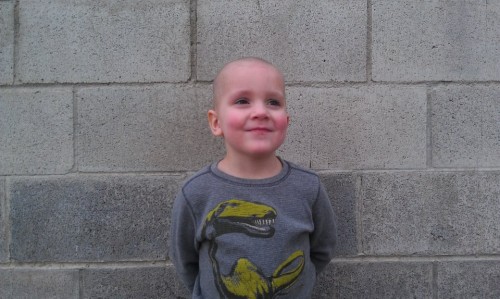
Hope’s Story: What the Heck?

http://embed.newsinc.com/Single/iframe.html?WID=2&VID=25195296&freewheel=90921&sitesection=chicagotribune&height=281&width=500

September is Childhood Cancer Awareness Month. Each day I will feature a different guest blogger who will generously share their personal experience with childhood cancer.  Stories are always more potent than statistics.  The hope is that by learning about children with cancer, readers will be more invested in turning their awareness into action.  Read more about this series and childhood cancer HERE.

By Deb Fuller

What the heck?  That is a classic Hope saying.  She had several, but that is my favorite.  She would hold her one good arm out and flip her hand back look at Dr. Stew and say “What the heck?” pertaining to whatever he was saying at the moment.

Hope


Why am I having such a hard time writing about my sweet girl? What do I want you to know about?  What words can I possibly share regarding awareness and research of childhood cancers that have not already been shared by much better writers than I?

Dates are things that for whatever reason stand out in my head.  Hope was born in South Korea on 6/26/97 and we found out she was ours on 9/19/97.   I always thought it odd that for 85 days I did not know my daughter was even alive.  She came home to her forever family on 1/23/98 and thus it began.

Hope was funny, smart, sassy, sincere, loving, and empathetic.  Hope was important.  She had potential and she would have made a difference in the world.  She wanted to be a doctor or nurse or a pastor.  We cannot possibly measure the loss of her life not only to those of us who loved her, but to the world in general.  She loved music and theater and her brother and she just loved life.

She was only 12 on 7/29/09 when she was diagnosed with DIPG.  Hope Alizah Kimlee Fuller died 224 days later on 3/10/10.  35 of those days were spent inpatient.  So truth be told she only lived for 189 days because after we entered the hospital she never walked again or really talked again or watched TV again or texted a friend again or went to the bathroom by herself again or even ate by herself again.  Those 35 days of beauty and the beast were some of the most tenderly painful moments I think I will ever experience.

Sometimes the beauty and the beast of those days are imperfectly blended so that when I recount them now my heart just aches with the memory, but at the same time I want nothing more than to remember each sacred moment.  One that comes to mind is after we had been inpatient for ten days.

Hope had not been awake or spoken to us at all for a couple of days.  Yet on this day whenever her buddy Grace (Grace was Hope’s lifelong best friend who only left the hospital for 1 of the 35 days we were there) would sit down next to her or lean over the rail to hug her Hope would pop her big brown eyes open as if she was the same girl she had always been.  Inside she was the same; you see DIPG doesn’t attack the cognitive center so while you lay slowing dying you are aware of it all.

Grace and Company
Hope and Company

Hope loved Grace and while I wasn’t privy to their secret conversations there was a lot of info being communicated through Hope’s beautiful eyes.  Several days later she was suddenly able to get a few words out “I don’t want to hurt any more” while Jay and I were holding her hands on opposite sides of the bed.  It was a gift that she was able to speak and that we clearly understood her.  I told her how much we loved her and how sorry we were that we couldn’t take the pain away and that if she was ready it was OK.  She could relax and we would be fine.  She replied “I’m ready.”  It was 2/10/10.

When you are under palliative care from really the first day of treatment you are not left with any real illusions that you might beat this.  As we lay inpatient over the course of the 35 days there were many highs and lows when we thought she would die and then she surprised us and fought on, even after she told me she was ready on the 10th.  Just when I would begin to think that I wouldn’t hear her voice ever again she surprised me on the 17th with three little words “lay with me.”

One time when she woke up for just a bit she asked for zucchini bread…now that was classic Hope!  The days were so filled with ups and downs and just hours of waiting and watching and wondering that it felt as if time actually stopped.  A couple of days later on the 20th Hope woke up and called my name so clearly that I jumped.  She wanted to know when I was going home and I told her that as long as she was in the hospital it was our home.  She nodded in agreement and I told her I’d always be by her side.

I asked when she thought she would go home and her response was “never.”  We talked about that being OK and that we loved her so much and how much we would miss her, but if it was time, she could go.  I asked her when she thought she’d go home to God and she said “I don’t know.”  Just like that, matter of fact and all.  The next day she actually made us laugh out loud as she mustered the strength to screw up her nose and make a horrible face to indicate that she thought a meatloaf bakery was disgusting.  On the 24th she woke up and said “Hi Mommy, I love you.”

All throughout those days Hope continued to be Hope.  She had secret whispers with her ‘BFF’ Nora.  Nora was the yin to Hope’s yang.  They were soul sisters who were not given enough time to love each other on earth.  One time she used a mix of words and gestures to try to get the top secret title of the next summer children’s theater production.  She promised not to tell anyone.  Another night, somewhere around the 1st of March, she managed to get out two particularly funny statements.  Now they weren’t clear as a bell but she said “My butt hurts my gluteus maximus,” and then she chuckled, knowing just how funny that sounded even to her. She overheard us talking and said “Wow.  I didn’t know Dairy Queen opened today.”

On 3/8/10 Hope spoke her last words to us and with the help of blinking and hand squeezes we were able to say our good byes.  It was after midnight when she asked me to get J.D. and Grace and her Dad to come back to our room.  She was so alert and she was crying.  We were able to decipher that she was afraid, she was scared.  My worst fear for her.  The three of us lay on all sides of her and we talked.  We laughed.  We cried.  She needed us to tell her one more time that it was OK for her to go.  On 3/10/10 at 2:58 in the morning my sweet Asian princess left for heaven.

I am sure you will agree that Hope died like she was living; on her own time based on her own agenda.

The Fuller family will always has Hope.
The Fuller family will always have Hope.

What the heck?  I guess I wanted you to know that Hope died.  That her life and death hold meaning and purpose and that you need to become involved.  The most important and most precious natural resources in the country are dying.

Please be aware of the facts about pediatric brain cancer and the organizations and foundations which focus on brain cancer; acknowledge brain cancer awareness efforts, support political action related to children’s cancer research and promote awareness of it.

Through our stories, may your interests be peaked, your desire to help increase, and your increased desire lead to action.  May your actions speak louder than words.  Hope has been gone for 3 years 5 months 2 weeks and 2 days.

I am most grateful to Deb for sharing such intimate moments, her last precious moments with Hope, so that we may learn.  Thank you, Deb.

If you’re looking for all of the posts in the  Childhood Cancer Stories: The September Series, you can find them catalogued HERE.  

If you don’t want to miss a single child’s story, you can subscribe to my blog.  Please and thank you!

Type your email address in the box and click the “create subscription” button. My list is completely spam free, and you can opt out at any time.

Matthew’s Story: The In-Between Place

http://embed.newsinc.com/Single/iframe.html?WID=2&VID=25195296&freewheel=90921&sitesection=chicagotribune&height=281&width=500

September is Childhood Cancer Awareness Month. Each day I will feature a different guest blogger who will generously share their personal experience with childhood cancer.  Stories are always more potent than statistics.  The hope is that by learning about children with cancer, readers will be more invested in turning their awareness into action.  Read more about this series and childhood cancer HERE.

By Wendy Burr

Matthew has Leukemia.

I never thought I could be so matter of fact about something that awful and terrifying. My baby boy, at just 3 years old, has cancer.

What can I say? The first month is crazy scary! You know there’s something wrong. Everyone knows there’s something wrong. His grandparents, his siblings, his teachers. But every mother I’ve talked to says they went from doctor to doctor, and it always seems to take a month from the first weird symptoms to reach a diagnosis. You desperately want that, but you don’t, because what if it’s something awful? Like cancer?

This is an excerpt from the beginning of Matthew’s cancer blog. After more than two years, I now understand that some parents find out much more suddenly and traumatically, but with leukemia, it can take some time. Matthew’s first symptom was night terrors, lasting several months. An infection in his salivary gland then swelled to the size of two golf balls in under twelve hours, and all the lymph nodes in his neck were hard, like marbles.

Golf ball sized infection in Matthew's neck.
Golf ball sized infection in Matthew’s neck.

After a month of doctors, antibiotics, weight loss, paleness, lethargy, fevers, and loss of appetite, those lumps, although smaller, would not go away. Finally, we took him to the ER at the children’s hospital. A Complete Blood Count indicated a problem. They admitted him, and started testing for leukemia. Three days later, they diagnosed Acute Lymphoblastic Leukemia (ALL) with a prognosis of 85-92%. This is about as good as it gets. We are the lucky ones.

Although cancer is awful, for me, it was also sort of a relief. I desperately wanted someone to help him. I’d been watching him die, from a simple infection, and felt so helpless. It wasn’t until weeks later that I fell apart. I’m still trying to put myself back together.

ALL treatment is long. For Matthew, about three and a half years. By the end, it will have been nearly half his life.

The first eight months included five intense phases of treatment. He lost his hair twice, experienced weight gain from steroids, weight loss from chemo, blood transfusions, and was mostly confined to our home due to low immunities. He had to stop preschool, but an amazing teacher came and taught him when he was well enough. She was his light in a dark place.

The remainder of treatment is a maintenance therapy. It’s a weird in-between place. The goal is to suppress the bone marrow, to reset it, in hopes that it will stop making cancerous blood. They check white blood counts monthly to measure success. Levels are high enough that he’s no longer home bound, but low enough that he’s still immune compromised. He can catch anything. Cold and flu season is terrifying.

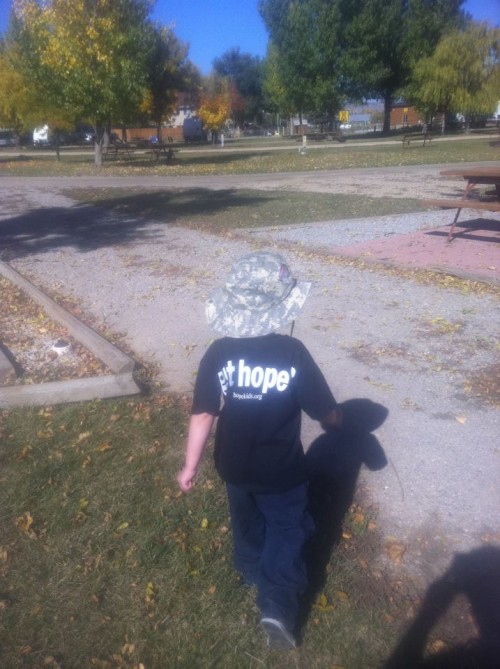
Got hope?  Every family of a child with cancer needs hope.
Got hope? Every family of a child with cancer needs hope.

Blood has a fast life cycle. So for ALL treatment, the first phase, called induction, is designed to kill all the cancer in 28 days. Matthew has been in remission since August 2011. All the illness he’s experienced since then was a result of his treatment, not his cancer. We have a real love/hate relationship with chemo. Everything we do now teaches the bones to make healthy, cancer-free blood. To prevent relapse, because ALL relapse is notoriously hard to cure.

In the 70’s, they stopped treatment after induction, and only 10% of patients survived because pretty much everyone relapsed. They’d kill the cancer in the blood, but the bones would just make more. ALL treatment has come a such a long way. Ten years ago, the survival rate was 50-70%. Today, it’s 80-90% or better. This has all been accomplished with no new drugs, because the drug companies and the government do very little to research childhood cancer. That’s why I feel so passionately about research. Matthew’s excellent prognosis has come from decades of study (one tiny tweak to the protocol at a time), and unimaginable numbers of participating children. Their parents enrolled them in studies knowing it wouldn’t help them, but hoping to improve treatment. What a gut-wrenchingly selfless thing to think about during your child’s terminal illness.

My son is living, breathing proof that it worked. If you’re one of those parents, reading this now, I want to say thank you, from the very depths of my soul, for hoping to make a difference for us. It worked. My son is a vibrant, vital reminder of that gift every day. Thank you. I can never thank you enough.

My life’s trajectory has changed. I’m studying to be a nurse, with the ultimate goal of pediatric oncology. But research remains vital. ALL treatment still isn’t perfect. If you look at the numbers, roughly 3 out of 20 kids don’t make it. Those numbers used to comfort me, until I started watching my friends’ children suffer and die. I’ve seen some good friends bury their bright and shining stars. It breaks me inside a little bit more each time, and then my resolve to act is heightened. It isn’t right.

Because ALL is the most common childhood cancer, and has the best cure rate, it weighs down the numbers, making it seem like all childhood cancers have a good cure rate, and this is simply not true. If you look at them individually, sarcomas, neuroblastoma, brain cancers (and so many more) … these cancers desperately need better treatment! Most have more like 50/50 odds, and some, like DIPG, have no chance of a cure. This is unacceptable. In a society where we claim our children come first, I cannot understand why the disease that kills more children than any other gets so little funding for research. If this ship were sinking, would we just let these little children drown? How come so few people are throwing out a life preserver?

To that end, I raise funds for research with a group of cancer moms in Utah. We walk for CureSearch because it has very little overhead, therefore a high percentage goes to actual research, sent on to Children’s Oncology Group (COG), the uniting research organization for all of North America. Last year, our walk earned $170,000, 100% of which went straight to COG. For more information about this year’s walk on October 5th, visit our website. If you’d like to walk with Matthew’s team, physically or virtually, visit his individual page.

We still have another year to go. Another cold and flu season. Kindergarten. Relapse is the scariest word I know, and it’s most likely to happen during this time. There’s an 8-15% chance, and it would change everything. We put this at the back of our minds, and try to live in the now. Right now, he’s relatively healthy. He’s happy, smart, funny, witty, and so very empathetic. When this year is over, we’ll take some baby steps back into real life. Someday, this will be in the rearview mirror, and Matthew will be a strong, contributing member of society. He’ll never be the same, but in many ways, I believe he’ll be better. Stronger, for what he has endured. More empathetic and kind. It has made him who he is.

ROAR, Matthew, ROAR.

“When the Japanese mend broken objects, they aggrandize the damage by filling the cracks with gold. They believe that when something’s suffered damage and has a history, it becomes more beautiful.”

~ Billie Mobayed

If you’re looking for all of the posts in the  Childhood Cancer Stories: The September Series, you can find them catalogued HERE.  

If you don’t want to miss a single child’s story, you can subscribe to my blog.  Please and thank you!

Type your email address in the box and click the “create subscription” button. My list is completely spam free, and you can opt out at any time.
Dr. Stew’s Story: What Not to Ask Me At a Party

http://embed.newsinc.com/Single/iframe.html?WID=2&VID=25195296&freewheel=90921&sitesection=chicagotribune&height=281&width=500

September is Childhood Cancer Awareness Month. Each day I will feature a different guest blogger who will generously share their personal experience with childhood cancer.  Stories are always more potent than statistics.  The hope is that by learning about children with cancer, readers will be more invested in turning their awareness into action.  Read more about this series and childhood cancer HERE.

By Stewart Goldman, M.D.

It is hard for me to explain the dread I feel when at a social gathering a stranger asks me, “What do you do?” It is not that I am shy, or ashamed. With every part of my soul, I am proud and honored to be a pediatric neuro-oncologist. I am thankful in ways I cannot adequately express that I was given the opportunity and privilege to  follow this path. So I can’t really articulate why I feel this discomfort.

The usual response received after I state my career  goes one of three ways:

  1. “OH, you must be an angel!” Not true, just ask my bride.
  2. “My God, that must be tough.  I couldn’t do it — I like children too much to hurt them.” This implies I don’t like children and don’t mind their suffering, which just hurts my feelings, and makes me mad.
  3. “That must be so sad, so hard, how do you do it?”

Unfortunately, this last response, which I hear frequently, has a simple answer, but one I cannot, nor do I always want to explain in a social setting.

First of all, let’s state the obvious:  cancer sucks, cancer is unfair, cancer in the brain is wrong, and the devastation it causes is horrific.  Going further, cancer in a child, well, that is the ultimate wrong.

Let’s not forget how wrong brain cancer is in a child. Let us not forget the pain and suffering they experience from their tumors, surgeries, chemo- therapies, and radiation.  Let’s not forgot that we lose way too many of these children, nor the devastation it brings to their parents, siblings, friends and community, or the loss to our world of these special children, whom I believe would make it a better place.

Yet in my daily life, I get to meet wonderful children, who happen to have a brain tumor.  Not people who feel sorry for themselves, but children who want to be normal, play, grow up, and experience the love of their families. I see parents re-prioritize their lives to focus on their family.  In a way, I think in our hectic complicated lives, we all lose at least a little of this focus.

In some strange way, I benefit from this reminder to realign my priorities, as I lose sight all too often. I see siblings, who themselves suffer in so many ways, develop a sensitivity, kindness, maturity  and compassion that goes beyond their chronological age, and an energy they will extend to others for years to come.

In my days, I see the best in people.  Yes, being a pediatric neuro-oncologist is hard.  It is our job to console and support the families and staff and not to fall to pieces ourselves.  There are times when the pain I feel over our inability to cure every child can be overwhelming.  Sometimes the responsibilities feel too much, but the joy to be involved and to feel part of the lives of these children and their families makes any negatives seem trivial.

This career is not difficult, it is a privilege.

Maybe that is why I feel so comfortable around other pediatric oncologists and oncology staff.  They get it; we don’t have to explain it to one another. Once when asked, “ How do you do it?,” I answered that I get more than I give.  This is the truth, but in those social settings, I normaly answer, “ I am a pediatrician.” Maybe not a complete description, yet still true, and then we can move on to the weather.

When Mary Tyler Mom asked me to contribute to her blog, I was not sure what to write about.  She said, “Tell some stories, not facts about childhood cancer, some stories.” So here goes.

  • One of my patients was raising cows for a 4H contest.  He named these calves after his medical team. He made a big poster with pictures of the cows with our names under our namesake cow. I was so confident that Dr. Stew was the best and strongest cow.  I hung this poster proudly and called attention to it for everyone to see.  A few months later, the boy came to the hospital all proud and excited.  It turns out Monica, a black and white Holstein (named after his favorite nurse), won the best in show.  When I asked what happened to the cow named Dr. Stew, he just rubbed his stomach and said, “ He was delicious.”
  • I am a die hard White Sox fan and had a running ‘Sox versus Cubs’ banter going with one of my patients.  One summer when I was out (with the aid of some accomplices), this patient located my car and address.  While I was away, he decorated my car and home in Cubs paraphernalia.  He denied for 6 months any knowledge of this prank, but  come the next Christmas I was given a present of a picture of him smiling while defacing my car with an “I Love the Cubs” license plate. This picture of him, with his giant beaming smile, remains on my shelf and is truly the only Cubs logo seen within a mile of my possessions.
  • During my Oncology fellowship in the late 1980s, I was caring for a 17 year old who was the only child of two holocaust survivors.  His cancer had recurred, and after years of fighting he was now slowly dying. He was a tremendous young man, mature beyond his age.  The kind of young man whose only concern was how his parents would survive without him there to care for them. I trained at a center that had the pediatric hospital connected to the adult hospital. During this time, my own mother was in her terminal phase of breast cancer, and I would spend nights  in her hospital room. One evening, I left her room to go back to check on my patients.  When I went to see this 17 year old, he and his family asked if they could pray for my mother. More than 25 years later, I am still in awe of the depth of kindness and humanity of this family.  How could this young man and his family, despite all the suffering they had seen, still be so giving to others? It is this type of compassion for others I see almost daily in the children and families we are so honored to care for.

Part of my job is to raise awareness of our cause and money for our research.  We even have a Facebook page. One day recently, we featured a picture of a three year old boy, happy and smiling in his hospital bed. This photo, true as it was, stirred deep emotions and even anger for some who know firsthand that childhood cancer is not all smiles.  I was reminded we should not ever, in any way, under emphasize the realities of cancer in children.

Having a brain tumor is not all smiles and fun.  Kids suffer.  Kids receive tremendously difficult treatments.  Kids endure horrific side effects.  Kids feel pain.  Kids die, and their loved ones die a little with them.

The realities of childhood cancer never go away.

My goal is to have these kids live as normal a life as possible, while providing treatment that leaves them with as few lifetime challenges as possible. My goal is a life for these kids, no matter how long or short, that is filled with as many smiles and as much joy as possible.

Despite the pain, these children and families persevere.  I marvel at my families (a little presumptuous on my part, but I do think of them as ‘my families’), how even in the worst of times, even with the loss of a child, they reach out to each other, or create foundations to raise money for research, or serve other families.  They want nothing more than for no other child and family to experience what they have.

This courage and the love of our patients, their families, and communities, motivates our team to push on, to fight harder, to find better answers. We owe that to the children and families we have served, and those we will serve in the future.

One of my instructions was to keep my blog under a 1000 words — guess that didn’t happen.

So maybe if we ever meet at a social gathering and you ask me what I do for a living, you’ll understand why I give you a one word answer, “pediatrician.” Now how ’bout those Cubs?

Dr. Stew in a clinic visit with Donna in March 2008 -- we had taken scans earlier in the day and he got to deliver us the good news that everything looked great.  Stew liked to take Donna "shopping" for a new toy at each visit.  This day it was some new Play Do.
Dr. Stew in a clinic visit with Donna in March 2008 — we had taken scans earlier in the day and he got to deliver us the good news that everything looked great. Stew liked to take Donna “shopping” for a new toy at each visit. This day it was some new Play Doh.

Dr. Stew was our daughter Donna’s neuro-oncologist at the former Children’s Memorial Hospital, now known as Lurie Children’s Hospital of Chicago.  He said something in the midst of her treatment that really helped pull us though, “Donna may have a brain tumor, but she is not a sick child.”  He was right.  Through his efforts, Donna was able to live her brief life with the best quality we could have hoped for, enabling her to know joy for many of her days.  We are indebted to him and it is not too much of an exaggeration to say I would take a bullet for this man.  He is that important to so many vulnerable children.  We love him dearly.  

You can support his research by making a donation here.  Under “Gift designation” in step 2, please make certain to designate the “Brain Tumor Research Fund.”  It looks a lot like this:

Screen Shot 2013-09-18 at 5.13.19 PM

If you don’t want to miss a single child’s story, you can subscribe to my blog.  Please and thank you!

Type your email address in the box and click the “create subscription” button. My list is completely spam free, and you can opt out at any time.