Cole’s Story: God Knows My Future

September is Childhood Cancer Awareness Month. Each day a different guest blogger will be featured who will generously share their personal experience with childhood cancer.  Stories are always more potent than statistics.     

By Cole Eicher 

A little under two years ago I was diagnosed at 12 years old with a brain tumor, Medulloblastoma.  It was shocking to me because just a few months before I was competing in soccer on a USA youth team playing against the Bayern Munich youth soccer team in Germany.  I worked hard for two years to make the team and was definitely at my best physically and then, suddenly, one month later I was waking up vomiting.

The symptoms went away after three days, but ten weeks later, they came back with vomiting and double vision.  The MRI showed a golf ball sized tumor in the back of my brain against my brain stem.

I was shocked, but I never felt alone.  My faith got me through it.  Every three months I have an MRI and they all have shown no evidence of disease.  I am recovering slowly.  It’s hard to gain weight because I’m growing.  If I don’t gain weight, then I won’t have the strength to go back to the activities I enjoy like soccer, school and just being with friends.  I keep trying, one bite, one sip, one day at a time to get to my goal.  I don’t want to take the medicine, I want to try to be able to do it on my own.

Yesterday, I learned that another friend of mine went to heaven.  It doesn’t seem fair. I know that he is in a better place.  Cancer brought Cole Owens and I together and cancer has separated us, but I will see him again.

I know that I was meant to speak on behalf of others.  When I would walk by the rooms on the cancer floor I would see children too small or too sick to speak out.  I’ve had experience speaking, so it just made sense to me that this was what I was meant to do.

The first thing I did while I was in the hospital was that I noticed there was a room that was not used very often.  It was a consultation room that mostly parents used.  I thought that it would be a great idea to make a “teen lounge” so when friends or family members came to visit they could go in that room and spend some time together out of the hospital room.  It also would be a way for teens on the cancer floor to support each other.
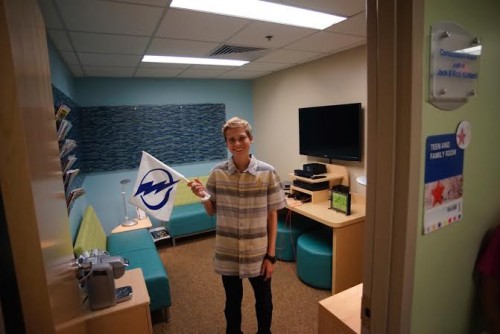
Cole at the opening of the Teen Lounge at his treatment hospital that he inspired and fundraised for.

In my entire year of treatment I met only one friend at the very end of treatment.  His name was Corey Parker and we used to pass the time with RC cars racing down the hallways.  The nurses didn’t mind the noise because they new it was good for us to be together.  Corey’s cancer came back and he was fighting it for the second time.  He fought it bravely, but never got to enjoy the teen lounge with me.  I think of him every time I go back and visit.

Now that I’m feeling better I am working on a couple of projects to spread awareness.  I was lucky enough to be supported by my local professional soccer team during my treatment.  Some of their season ticket holders told them about me and the team gave me a one day contract that turned into much more.  On game days the players would come and catch up on how I was doing and it gave me something to look forward to. I felt special because they said I motivated them to work harder through their challenges.
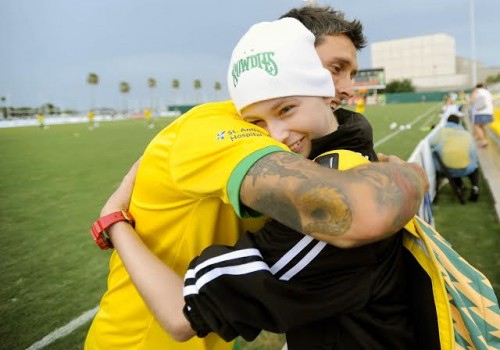
Cole being embraced by a Tampa Bay Rowdie player.  What a win-win.
Cole being embraced by a Tampa Bay Rowdie player. What a win-win.

This year when the season started I asked for an appointment with the owner of the team.  I told him how the support of the team really helped me and I wanted to help more kids.  I asked him to have the team “Go Gold” for childhood cancer awareness month in September.  He said yes!  When I asked him if he would help me inspire the entire North American Soccer League to “Go Gold” next year, he said yes.  I can’t wait to see all the kids at the games with their families having fun and feeling supported.  We are also fundraising for pediatric cancer organizations during the month.

I’ve seen that sharing my story makes a difference so I shared it with the American Cancer Society.  They have $18 million dollars going toward pediatric cancer research each year and have 35 researchers working on current projects, but I’ve learned that many families don’t know that they can have resources and support from them.  I’ve also learned that kids like me can often get cancer again. If that happens, we will need to rely on the American Cancer Society as I will have outgrown the pediatric cancer support groups.

They do a good job, but they can do more.  I have seen that when kids share their story that people want to help.  I made a video in partnership with the American Cancer Society that I hope will make more people aware of childhood cancer and I also want it to give people hope.  In the video I share that I got through cancer treatments by taking it one day at a time and at the end when you feel like giving up, that you just have to give it a little more and you’ll get through it.  This video will be seen by everyone who works for the American Cancer Society and will be available for all the thousands of volunteers to see also.
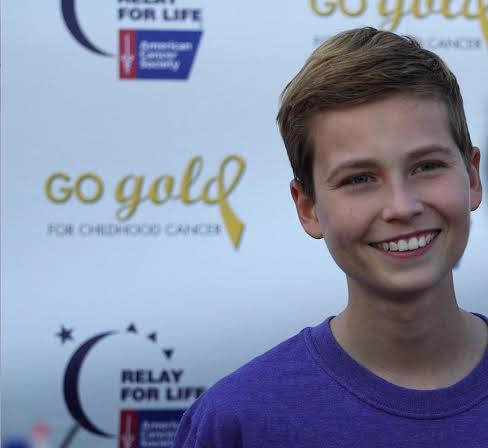
#ColeStrong
#ColeStrong

My Mom says “when you meet a child with cancer you never ever forget them.”  I am hoping that this will be the case so that we can focus on curing cancer.

**********

If you don’t want to miss a single entry in the September Series, consider subscribing to my blog.  Here is how: Type your email address in the box and click the “create subscription” button. My list is completely spam free, and you can opt out at any time.

Maggie’s Story: In Sickness and In Death

September is Childhood Cancer Awareness Month. Each day a different guest blogger will be featured who will generously share their personal experience with childhood cancer.  Stories are always more potent than statistics.     

By Moira Byrne-Philbrook 

When your child is diagnosed with a potentially fatal illness you wonder why.  She has a pure heart and soul, so why is she sick??  She is kind, and too young to have done anything she might have to “pay” for.  You run through the whole “sins of the father/ mother” thing.  You make deals with God, Mother Nature, the universe, anyone who might listen.

There is never an answer, though.

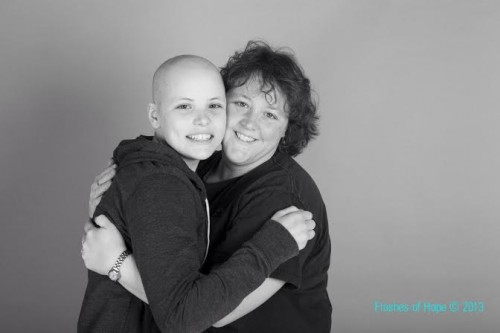
Maggie and Mom, Moira.  Photo courtesy of Flashes of Hope, Catharine Morris photographer.
Maggie and Mom, Moira. Photo courtesy of Flashes of Hope, Catharine Morris photographer.

Fear becomes your new normal.  You hope all ends up okay, but the statistics aren’t fabulous.  I would count the number of children we knew of with cancer, and could convince myself that Maggie wasn’t going to be the one to die.

Maggie responded so well to treatment, I got to the point that I actually believed she was going to be a cancer survivor.  As I’ve said, though, you can’t turn your back on the beast.

When your child dies, you play the head games again.  Why her?  Why my child?  What did we do?  What does this mean?  You figure you don’t need to keep up your end of any of the deals you brokered with God, Mother Nature, the universe, or anyone who might have listened.  Once again, there is never an answer.

There are plenty of, shall we say, schools of thought about the death of children. People say she’s in a better place, she’s not suffering.  Perhaps she avoided a horrible future by dying young.  Late effects, which are no picnic, have been avoided.  In the end, it’s all just sad, and it all just sucks.  No matter what, we’ll always believe that the best place for Maggie is right here with us, living the life she was supposed to lead.

Maggie at the New England Regional Cheerleading  Competition, three months before diagnosis.
Maggie at the New England Regional Cheerleading Competition, three months before diagnosis.

We are on vacation, and have been able to spend some time with Maggie’s friends.  I find great comfort in spending time with these teens.  I would like to think they find comfort in being with our family too.  I want my sweet, beautiful girl back, but since that can’t happen, I am happy to surround myself with her friends.

Perhaps, someday, we will get some answers.  Will someone touched by Maggie find a cure for cancer?  Will something good come from all of this bad?  Who knows??  I do know that sadness is our new normal, and we miss our girl.

**********

Moira Byrne-Philbrook is the mother of three and blogs at I Made My Kid Walk to School With Cancer.  Her oldest child, Maggie, died of rhabdomyosarcoma in 2014.

**********
If you don’t want to miss a single entry in the September Series, consider subscribing to my blog.  Here is how: Type your email address in the box and click the “create subscription” button. My list is completely spam free, and you can opt out at any time.

Benjamin’s Story: Certain Moments

September is Childhood Cancer Awareness Month. Each day a different guest blogger will be featured who will generously share their personal experience with childhood cancer.  Stories are always more potent than statistics.     

By Alethea Mshar 

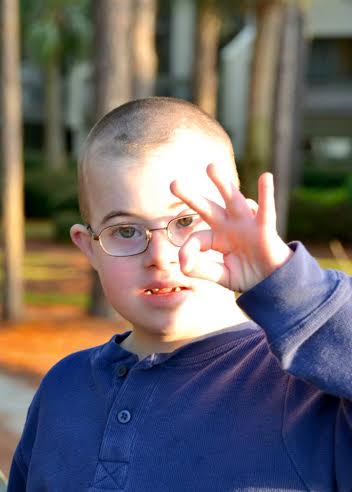
Let me first tell you about my son.  Benjamin is a handful.  He is a willful child, facing obstacles with determination and perseverance.  Benjamin was born with a bonus, at least that’s what I like to call it.  He has a bonus 21st chromosome, medically referred to as trisomy 21, commonly referred to as Down syndrome.  We brought Ben home at 3.5 months old in May of 2006 as his adoptive parents, believing that, other than the bonus, he was healthy, strong and had no additional challenges.

Benjamin
Benjamin

Boy, how wrong we were.  Ben came home in May, and by August he was diagnosed as moderately/severely hearing impaired, and by his first birthday his thyroid had failed, he had been hospitalized with RSV, and was failing to thrive, not growing or gaining weight, and falling off the growth charts.   After numerous phone calls, pediatrician and specialist office visits, we got the answer of Hirschsprung’s Disease, and Ben had a surgery to correct that.

Shortly after the surgery, his struggles took on yet another form, and after several hospitalizations, Ben got the diagnosis of Cyclical Vomiting Syndrome.  Once again, we got the situation under control with the help of a team of doctors, and finally, at the age of 2-1/2 years old, Benjamin started thriving, developing in leaps and bounds.  We thoroughly enjoyed this period, having no idea just how short lived it would be.

In late fall of 2009, Ben lost energy, had vague symptoms of malaise, and was just plain grouchy.  That December, we had a family trip planned to Great Wolf Lodge.  Ben had some vomiting symptoms the morning we left, but after some hemming and hawing, we packed up his nausea meds, some Tylenol, and anything else we thought we might need, just figuring it was a cyclical vomiting issue that could be managed.

By the next morning, after spending time on the phone with his pediatricians and specialists, we took him to the local emergency department.  From there, he was sent to the Children’s Hospital near our home, where he stayed for a week with odd complaints which ran the gamut from fever, diarrhea, vomiting, and leg pain.  At one point his white blood cell count was elevated with blasts noted (immature white blood cells, which are the telltale sign of leukemia), but after review by the oncologist, it was determined to be transient leukemia, which is not uncommon in children with Down syndrome.

After finding no real answers, Ben recovered to the point that we all agreed that inpatient care was not necessary, and Ben was discharged on December 21, just in time to celebrate Christmas at home.

The celebration came and went, with Ben showing no real improvement.  His leg still hurt, and he just wasn’t himself.  By New Year’s Eve we were back on the phone and once again ordered to the emergency room.  This time the answers came quickly, even abruptly, and were grim. Ben had blasts in his blood again, but this time there wasn’t much doubt that it was a true leukemia, and by the end of the day the bone marrow biopsy had been completed, and we had our answer.

Benjamin in hospital.

Certain moments in life seal themselves in your memory, and that day had several of those moments.  In one of them, a physician’s assistant named Aaron, who because a trusted caregiver throughout the treatment, did the bone marrow biopsy.  Aaron is a young, big, strong, capable man.  When he came to tell me about the biopsy, he was clearly stricken.  He had held out hope for little man, that there was still a chance that the bone marrow biopsy wouldn’t show leukemia.  But when he bored into the bone to get the sample, something he had done countless times, Ben’s bone splintered, a dire sign.  Seeing this professional, so big, so seasoned, so clearly a together person, break his composure when delivering preliminary new to me was simultaneously touching and nearly a breaking experience.

By evening, Ben’s primary oncologist delivered the results in the most astonishingly gentle and uplifting manor.  It’s impossible to convey how such a dire conversation could cement a transparent and trusting relationship which would carry on for nearly six years, but to this day I adore these men who brought compassion and hope in the darkest moment of my child’s life, which had already had plenty of challenging times.

Along the way, there were so many dark and challenging setbacks and difficulties.  Many additional hospitalizations were required, and many setbacks which have yet to be overcome, including a 20 point IQ drop, urinary incontinence, and other difficulties which will likely prove to be lifelong.

Although I’m still not exactly clear on why or how, there is a connection between Down syndrome and leukemia, with higher incidence of both Acute Lymphoblastic Leukemia (the type Ben had) and Acute Myleloid Leukemia.  Children with Down syndrome typically have better than average outcomes with AML, and worse than average outcomes with ALL.  The treatment for a little boy with ALL is automatically 3-1/2 years.

Many of the chemotherapy agents are especially toxic to people with Down syndrome, and the doctors often have to tweak the road map of treatment to avoid toxicity, which can increase odds of relapse and treatment failure.  We were very thankful to be able to contribute to cancer research by participating in clinical trials, and equally grateful to all those who participated in trials in the past, which certainly improved Ben’s outcome.

Alas, Ben is nearly 6 years out from diagnosis, and over two years out from end of therapy.  We are told that relapse at this point it highly unlikely, yet we often struggle with any symptom that appears to coincide with any of his leukemia symptoms.  Our whole family has been traumatized, and though we often go through life in a reasonably normal fashion, so often the fears rear their heads and re-traumatize us, more often than not coming straight out of the blue where they are totally unexpected.

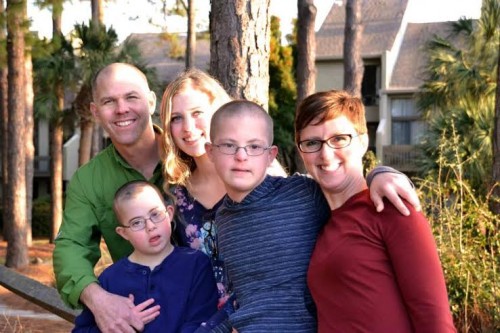
Benjamin's "reasonably normal" family living with the trauma of childhood cancer, which never feels normal.
Benjamin’s “reasonably normal” family living with the trauma of childhood cancer, which never feels normal.

This path has changed everything.  It’s a path I want others to understand without walking it themselves.  My hope is that by raising awareness, we can raise funding, and empower future childhood cancer fighters to a better outcome.

**********

If you don’t want to miss a single entry in the September Series, consider subscribing to my blog.  Here is how: Type your email address in the box and click the “create subscription” button. My list is completely spam free, and you can opt out at any time.