DONNA DAY 2016: There Was a Time When Every Day Was Donna Day

There was a time in my life, not too long ago, actually, when every day was Donna Day.  Every day revolved around caring for our little girl with cancer.  If it weren’t medical procedures, clinic visits, or home health nursing visits, it was time spent showing Donna what a wonderful, beautiful place the world was.  At the heart of all of it, though, was Donna and her cancer.

When you are parenting a child with cancer, cancer is always there.  Always and in all ways.  It never goes away.  Six years after her death, Donna’s cancer still stays with us. Freaking cancer.  But, truth be told, six years after her death, not every day is Donna Day anymore.  Some days she is more present for me than others.

July 20 will always mark Donna’s birthday.  October 19 will forever be the calendar date that Donna died.  Holidays like Christmas and Halloween — those most closely associated with children — will never not be about Donna, despite her absence.  First days of school are a reminder of what grades Donna will never attend. This past September it was 5th grade.

The first year our family hosted a St. Baldrick’s shaving event to raise money for pediatric cancer research was 2012.  Donna was very present on the Internet that spring, as I had cataloged her cancer story just a few months earlier.  Strangers near and far had come to know Donna and the toll that childhood cancer can have. Strangers near and far also came to love Donna, a wee little girl they had never met.  The Internet embraced Donna’s story in a way that still impacts my day-to-day life.

In the five years we’ve been fundraising for St. Baldrick’s, generous shavees and donors have raised over $373K dollars to help the researchers dedicated to finding cures for pediatric cancer.  That astounds me.  Donna has inspired so very much.

One of the fundraising tools I have used each year is an annual Donna Day.  Today is Donna Day.  It is the one day a year — the actual date changes from year to year, that I ask fellow bloggers to use their voices and platforms to tell Donna’s story and share links to our St. Baldrick’s event.  The goal is for people to read and give.  It is so simple — read, feel, give.  I am humbled, annually, by the number of bloggers who will to do this and the number of dollars raised by this collective plea to right the wrong of underfunding for pediatric cancer.

This year, I am feeling reflective, though, to that time in my life when more of my day-to-day was spent in the presence of Donna.  Her sweet face, her silly nature, her graceful fingers, her lips and fingers sticky with grape jelly that she liked so much.  When Donna Day wasn’t about raising money or helping fund cancer research, but about really experiencing every moment of Donna that I could, knowing full well that those moments would very likely be limited.

A friend of ours is a very talented photographer.  Twice during Donna’s illness Anne came to be with our family during such difficult times.  She just jumped right in, camera in tow, helping us and capturing our girl.  I could not know it at the time, but the images she captured — those frozen moments in time with Donna — are a gift I will never be able to convey my gratitude for.  Donna’s crooked smile is on film.  The little dimples in her small and delicate hands are captured.  The look of determination in such a small face is something we can look at again and again now because of our friend, her eye, and her camera.

These images (all courtesy of Anne Geissinger) are from a couple of Donna Days in the spring of 2008 when we were living in Bloomington, Indiana.  At the time, the only proton radiation facility in the Midwest was located there (it has since closed).  Our little family picked up stakes and lived there for three months, Mary Tyler Dad straddling Chicago and Bloomington both.  Donna was at home there.  She was such a chipper and adaptable kid.  Our routine was wake up, rush to the proton center, get sedated, get zapped, wake up, eat, then spend our days in the welcoming little city of Bloomington.
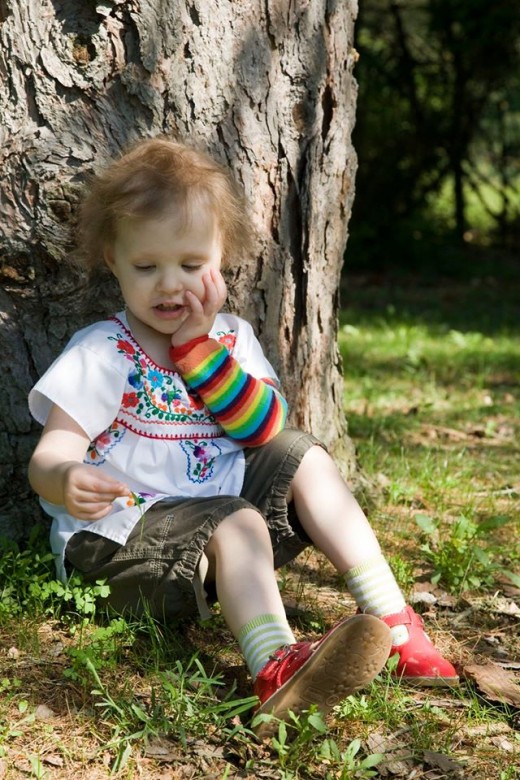
Donna being so very Donna.  Sitting under a tree, thinking.  She is wearing a combination of cargo shorts and a delicate floral top.  And red mary jane shoes.  Always red mary janes.
Donna being so very Donna. Sitting under a tree, thinking. She is wearing a combination of cargo shorts and a delicate floral top. And red mary jane shoes. Always red mary janes.
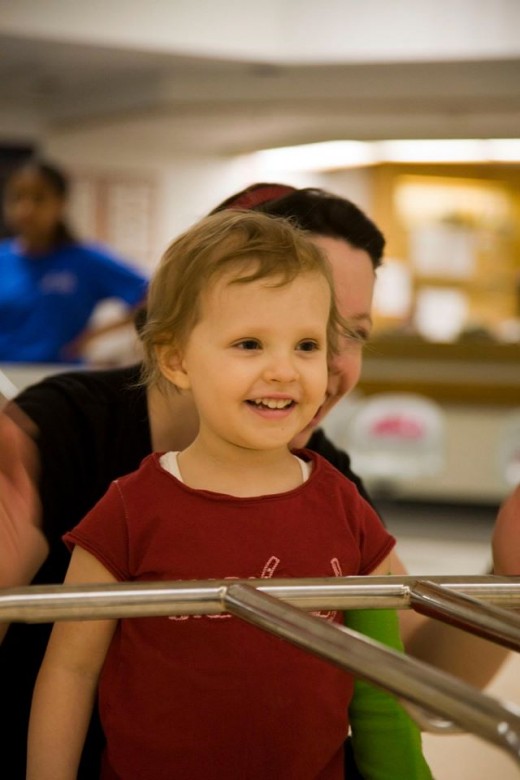
Donna and I at the IU bowling alley.  We only went a few times, but Lordy, that girl loved to bowl.  She had so much fun watching the heavy ball roll, roll, roll, and, hopefully, hit a few pins.  It made her so happy.
Donna and I at the IU bowling alley. We only went a few times, but Lordy, that girl loved to bowl. She had so much fun watching the heavy ball roll, roll, roll, and, hopefully, hit a few pins. It made her so happy.
Do you see the dimples in her hands, just above her fingers.  Donna never lost all of her baby fat.  Her little hands always retained their baby grace.
Do you see the dimples in her hands, just above her fingers? Donna never lost all of her baby fat. Her little hands always retained their baby grace.
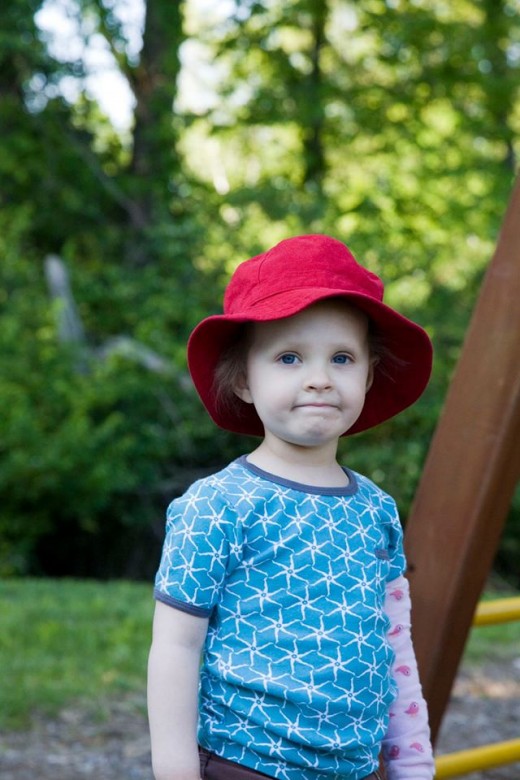
Donna's crooked smile, her knowing grin and wise eyes.  This captures my girl so very well.  And the red hat.  Always the red hat.
Donna’s crooked smile, her knowing grin and wise eyes. This captures my girl so very well. And the red hat. Always the red hat.
Donna's scar.  It was called a "hockey puck" and the doctors tried to cut into it with each surgery, so as to prevent new scars.  It helped that her tenacious tumor always grew back in the same place.  The radiation was centralized there during our weeks in Bloomington, so her hair would never grow back in this area.  I am grateful it was in a place she could not see.  When she looked in the mirror, Donna saw Donna.
Donna’s scar. It was called a “hockey puck” and the doctors tried to cut into it with each surgery, so as to prevent new scars. It helped that her tenacious tumor always grew back in the same place. The radiation was centralized there during our weeks in Bloomington, so her hair would never grow back in this area. I am grateful it was in a place she could not see. When she looked in the mirror, Donna saw Donna.
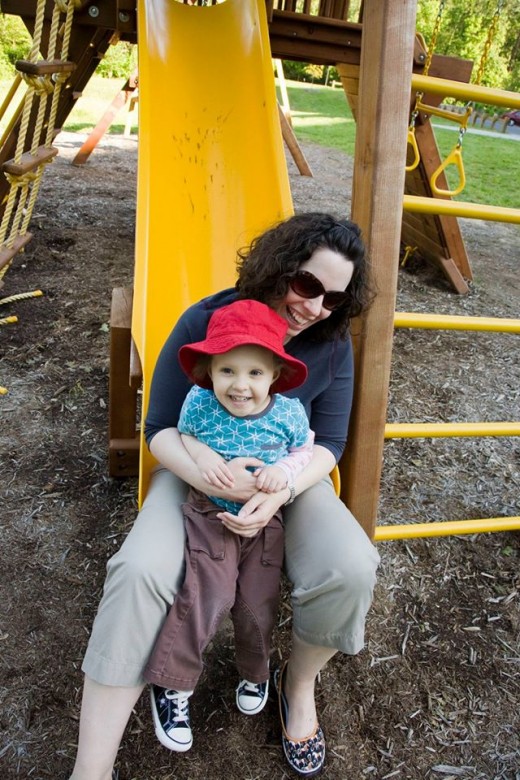
Mothering Donna, my happy girl.  What a glorious Donna Day this was.
Mothering Donna, my happy girl. What a glorious Donna Day this was.

I am grateful for today’s Donna Day reminding me of those Donna Days I treasured when our girl was still with us.  Cancer was our girl’s fate, and I know and accept that.  But still, I will continue to push for a different fate for children now diagnosed with cancer and those who have yet to be diagnosed.  Researchers need better options than adult chemo regimens that are 20-30 years old.

Please consider making a donation, TODAY, Donna Day, in memory of this sweet girl who inspired so much and still, somehow, keeps inspiring.

If you are local to Chicago and want to shave you head, sign up HERE.

If you can’t shave, but want to help find a cure for childhood cancer, donate HERE.

Thank you, sweet readers, for indulging me yet again as I grieve and advocate.  

The Orange Balloon: A Story About Grief and Living

Once upon a time I took my daughter to the grocery store.  She was in the midst of cancer treatment, but it was that brief time of the month in between her chemo sessions that she was able to walk and breathe freely amongst others in the world.  We got pretty efficient at packing 30 days of living into six or seven.  And a grocery store doesn’t seem like much, but, hey, it was Trader Joe’s and she was a young toddler, so trust me when I say a trip to the grocery store was cause for celebration.

We had finished our errand and my little bald headed Donna was gifted a balloon by the cashier after we checked out.  It was a bright orange balloon, on a white ribbon.  I remember it like it was yesterday, despite the calendar telling me it was almost eight years ago.  Stupid calendar.

As we drove home I remember feeling anxious that Donna was holding and playing with a latex balloon.  Can you even imagine a child with cancer dying after ingesting a balloon?  In those days, my worries ran high and I kept peeking glances in the rear view mirror, reminding my girl not to put the balloon anywhere near her mouth.  She laughed and giggled and wiggled her fingers along the orange balloon, making funny squeaking noises that brought us so much joy.

We got home and pulled into our parking space.  It was a bright, chilly afternoon, but one that held the promise of warmth and spring not too far away.  I ran the groceries up first, then came back down to carry in my girl.  As I opened the door, in the flash of a moment that will stay with me forever, Donna’s bright orange balloon flew past me, weaving through my arms, ascending higher and higher.  It was gone with the wind.  Literally.

Tears ensued.  Wails.  My beautiful girl was so, so sad.  I was so, so mad at myself.  Why hadn’t I thought to open the door more carefully?  Why hadn’t my arms and fingers reached higher or more deftly?  Why hadn’t the girl been holding on to her precious balloon more carefully?

None of those questions mattered.  The balloon was gone.  Long gone.

I tried to make lemonade out of the lemons of that lost balloon, telling Donna, as we watched it fly higher and higher into the sky, moving further and further away, that perhaps it might reach her Baba, my mother, Donna’s namesake who died before she was born.  We never talked about heaven much or what it meant to be dead or where you went, but in that moment, grasping as I was, the idea comforted both of us.

Today's orange balloon, which looks so much like that other orange balloon.  The bright blue skies are the same, too.  It is for Donna, and her brother, a small connection.
Today’s orange balloon, which looks so much like that other orange balloon. The bright blue skies are the same, too. It is for Donna, and her brother, a small connection.

Hours and days and weeks and even months later, Donna would remember her orange balloon and tell me how sad she remained about it.  It became part of our lore, our little family of three.  We all knew the significance of that orange balloon and the sadness it brought to our girl.  But just as she remembered her sadness, she, too, felt comforted with the idea of her grandmother, a fine lady she had never even met, keeping it for her, holding it safe, being cheered by the orange balloon herself, up high in the sky.

Not an orange balloon crosses my path that I don’t think of my girl and that beautiful day and her profound sadness at losing something she treasured, if only for a short while.

Today I was at a different store, paying a different cashier, when I spied a bouquet of balloons at the next register, clearly waiting for a young child to claim them, one by one.  They were pink and yellow and orange, of course.  I was child free this morning, but when I grabbed my change I asked the cashier if I might take one for my little guy at home.  “Of course,” she smiled, “that is what they are there for.”

I lied to that cashier.  I told her it was for my little guy, but that was a fib.  That orange balloon was for Donna.  Every orange balloon is for Donna, today and every day.  Of course, when my boy wakes from his nap, there will be an orange balloon waiting for him to play with, but you know, and I know, that his afternoon joy comes courtesy of the sister he never met.

That orange balloon will always and forever be for Donna, the little girl I treasured, if only for a short while.

**********

On Saturday, March 19, 2016, the 5th annual Donna’s Good Things shave for St. Baldrick’s will be held in Chicago.  Please consider joining us as a shavee or donating to our event.  CLICK HERE.  Just like that orange balloon, raising money for pediatric cancer research is part of Donna’s legacy.

In Case of Emergency

I’m taking a break.  No one I love is allowed to need me in any extraordinary capacity for the undefinable future.  No sickness.  No breaks. No demanding needs.  No crisis allowed.  Like I said, I’m taking a break.

For long (or short, depending on how you look at it) swaths of my life, I have been a caregiver.  I was a professional caregiver for ten years working with older adults. I got paid to care and provide support to older adults and their families as they navigated aging.  It was important work and I both loved it and was good at it.  It challenged me.  I hope, if only in small ways, that I provided some comfort for a few people along the way.

One day almost twelve years ago now, I was readying a presentation with a mentor I was to give the next day for a room full of seasoned therapists and social workers.  I don’t even remember the specific topic, but it was something about caring for older parents.  I was nervous as hell, but prepared and excited.  For a clinical social worker, I was hoping to enter the big leagues where Chicago’s most well respected therapists might actually learn who I was and what I was capable of, clinically speaking.

That afternoon I got a call from a nurse in a Biloxi, Mississippi ER.  My Mom had been admitted and she was alone.  They wanted someone who knew her to talk to her. My Dad had been contacted and was on his way, but wouldn’t arrive for at least an hour.  Was I Sheila Quirke, daughter of Donna Quirke?  Yes, of course, that ‘s me, my heart beating fast.

Found in my Dad's wallet.  I keep this on my bureau, looking at it frequently, remembering my Dad, my Mom, being the caregiver they needed.  I hope I was worthy of a note like this.
Found in my Dad’s wallet. I keep this on my bureau, looking at it frequently, remembering my Dad, my Mom, being the caregiver they needed. I hope I was worthy of a note like this.

That, right there, over the telephone, was the moment I became I caregiver. I grew up in the time it took that nurse to dial my number.  It didn’t matter that I was in my 30s and married with a career and an office with my name on it.  I wasn’t a grown up until that moment I became a caregiver.

My Mom’s speech was slurred.  She just kept saying “okay” over and over, but it sounded something more like “ooohhhhh-k-aaaaaayyyyyy, ooohhhhh-k-aaaaaayyyyyy, ooohhhhh-k-aaaaaayyyyyy.”

Her voice scared the hell out of me.

I would spend the next year helping my Dad and sister (and some very loving and compassionate paid caregivers) take care of my Mom who no longer was able to walk or talk or bathe or eat or toilet independently.  I would not trade that year for anything.  The foundation of my life shifted in that year, but I was too busy washing sheets and cooking meals to realize it.

It was a privilege to care for my Mom, who, it must be noted, was amazingly gifted at receiving care.  She was gentle and receiving and patient and kind, despite her injuries and insults that prevented her from ever enjoying the life most of us take for granted every day.  She taught me so much in that year without words.  She shaped me in ways that only a mother can.

Just a few months after my Mom died our daughter was born.  We didn’t learn of her sex beforehand, but knew if I delivered a girl, she would be named after my Mom.  The first word I ever spoke to my first child, when I held her in my arms the moment after delivery, was “Donna.”

Donna was a joy and a gift and healed my family in so many ways.

When young Donna was herself diagnosed with a brain tumor at 20 months old — the same thing that my Mom died of — the caregiving I did reflected the intense love a mother has for a child.  For 31 months I cared for my child with cancer.  The cancer took Donna from us and life will never be the same.  We are changed, my husband and I.  Cracked, but holding. Damaged in invisible ways.

My father, who throughout my Mom’s illness, when he needed to let off steam, would say, “I’m going to collapse when this is over,” somehow didn’t.  He held it together after my Mom died.  He sold their home and moved into an apartment in the city.  He became a widower after 46 years of marriage, but figured it out.  He was happy enough, as they say.  He would pop by unannounced.  He would sometimes babysit for little Donna.  I loved living near him, keeping tabs on him.

After little Donna died, my Dad did collapse.  Two months after we buried her, he suffered a heart attack on the operating table during a knee replacement he had been putting off for years.  He fell into a terrible, intractable depression.  The losses he had experienced finally permeated and he just surrendered.  I spent much of that first year of my grief worrying over my Dad, getting him to appointments, cajoling and supporting and prodding and screaming in frustration over what depression does to a person.

It passed, finally, his depression.  Slowly, slowly, slowly, slowly, slowly he recovered.  I didn’t worry as much.  I didn’t have to fuss or prod as much.

In the ten years my Dad lived after my Mom died, we had a lot of conversations about our grief, about aging, about quality of life, about his wishes.  We had a plan, tentative and abstract as it was, that my Dad would live with us when and if the time came.  If ever a person was not cut out for institutionalized living, it was my Dad. He hated authority, always had, even as a young boy with nuns telling him that two plus two equaled four.

But the best laid plans of fathers and daughters often go awry.

When my Dad required caregiving, like my Mom, it happened suddenly and without notice.  Unlike my Mom, he was not a gracious receiver of care.  He was a King Lear who fought it every step of the way.  He roared like a lion, saying the most painful of things, wounding with words.  He hated needing help, fought against dependence (literally and figuratively), got angry at those providing care.

We didn’t know it at the time, but cancer was advancing in his body and it changed him neurologically and cognitively in ways that brought out the worst in him.  I did the best I could for him, advocated with doctors, cajoled nurses, managed his finances, found adequate housing when it was clear that our home would never be an option — as it turns out, a raging older man, even a beloved father, and two young children don’t really fit together.

My Dad’s illness was short, blessedly so.  From his neurological changes to death, only six months had elapsed, but those were six of the longest months of my life.  They changed me, too, just as the months caring for my Mom and daughter had.  One of my life’s greatest gratitudes is that my Dad returned to some version of himself before his death.  His last weeks were absent those personality changes that had been so painful to witness.

Now I feel empty.  Spent.  Done.

I was the best caregiver I could be for my Mom and daughter and Dad.  I was committed and present and passionate.  But now I fear I have reached my quota of caregiving.  Interspersed between all these caregiving episodes, I have raised and am raising young children.  Between three children spaced four years apart overlapping three episodes of intense caregiving over roughly the same period, stick a fork in me, because I am done.  Finished.  Don’t call me in case of an emergency, because I don’t know if I will be able to help you.

If you are a caregiver, I salute you.  May the force be with you, because you will need it.  I watch from afar as some of my friends go through their own caregiving experiences — some lasting year upon year upon year — some making my own caregiving look like a ride at Disney.  You have my utmost and everlasting respect.  I hope someone is there for you the way you are there for the ones you love. May you, one day if not today, know peace again.

If you know a caregiver, please, give them a break.  Or a hug.  Or a Starbucks.  Caregiving can be such an isolating experience.  It demands your full attention, to the detriment of so many other things you would or should be doing.  Know that what they do, sandwiched in between going to work and shopping for groceries, is sacred.

And if you have not yet been a caregiver, but will be some day, I salute you, too.  Not everyone can do it, and that’s okay.  But if you are called to it, out of choice or necessity, may you find what you need to provide for those you love.