How $10 and Amazon Allowed Me to Go Home Again

Ten years ago I lost my Mom and last spring my Dad died after ten years as a widower.  Less than a year after my Mom was gone, my Dad opted to sell their last shared home and sold or distributed most of their belongings accumulated after almost 50 years of marriage.  It was hard and it sucked, but then it was done.  Their last shared home was not the home I grew up in.  In my early 20s my folks sold my childhood home and moved to a rural area about three hours outside Chicago.  It was never my home, but it felt like home, as it was full of all of the trappings of my childhood, including my parents.  I got married there and always enjoyed visiting.

My actual childhood home was a fairly standard suburban home just outside Chicago.  Come to think of it, my childhood was fairly standard, too.  Suburban. Homogeneous.  Mundane.  My folks both grew up in the city proper of Chicago and, unlike some of my peers, we went into the city fairly regularly.  I wrote about some of those trips HERE.  For the most part, I had a fairly tame childhood.  We ate a lot of meat and potatoes and canned vegetables.  We took one memorable family vacation — renting an RV and driving through the western US, but other years were content with a weekend in St. Louis or staying at the Holiday Inn at Janesville, Wisconsin.

It was a no frills kind of childhood.

I was also raised during an era where parents didn’t feel responsible for entertaining or scheduling their kids.  Parents did their thing and kids did their thing.  Some times those overlapped, like on those weekend trips, but quite often, they didn’t.  My siblings and I weren’t involved in sports or many structured activities, so our down time was largely open.  I remember as a young child complaining to my Mom about being bored.  “Go outside,” she would say.

I read a lot.  I listened to old albums on the stereo.  I made up my own dance routines in the living room.  I consumed television.  I devoured my older sister’s yearbooks, memorizing the names and faces of many of their classmates.  I would pull volumes of our Encyclopedia Britannica off the shelf and randomly look up things.

One particular coffee table book helped me organize a lot of that unstructured time.  I would stare at it for hours, looking at the photos, reading some of the commentary, learning as I went.  Alfred Eisenstaedt’s Witness To Our Time was published in 1966 and documented the Life photographer’s international travels and assignments from 1922-1966.  A lot of shit went down in the world during those decades.  The Great Depression.  World War II.  The rise of Hollywood.  The decolonization of Africa.

At the time, I didn’t really understand all that I was being exposed to, looking at those photos.  How I experienced it at the time was as a portal, if you will, into the immense world outside our 1970s suburban living room.  That world was glamorous and harsh and cold and hot and romantic and brutal and so damn interesting.

Like most kids, I grew up.  My life expanded outside my parent’s home.  The hours I spent looking at those photos of Eisenstaedt’s probably stopped once I hit junior high, certainly high school.  When we divided some of my parent’s possessions after my Mom’s death, my older sister claimed the book for herself.  That made sense, as she was an historian with an emphasis on media and photography.  I didn’t think too much of it until my Dad’s death earlier this year.

There I was again, amidst my siblings, divvying up the remnants of my parents’ lives, and, to a certain degree, our childhoods.  That kind of act kicks up a lot of dust.  A.  Lot.  Of.  Dust.  It’s hard to explain if you haven’t been through it.  It hurts like hell until it scabs over, as most wounds do.

Fast forward to a few weeks ago when, out of the blue, I thought of that book again.  That coffee table book of my childhood I hadn’t thought about in literal decades. Being an adult now, in the age of the Internet, I Googled it.  Bam.  Within a few minutes I found a first edition copy on sale for $10 through Amazon.  Boom.  I punched a few numbers into the keyboard and waited for it to arrive on my doorstep.  And last week, it did.

When I opened the envelope, the book was instantly recognizable.  Like magic.  Like a time traveling machine bound in gray linen.  As my kids and husband ate dinner, I poured through pages I hadn’t looked at in at least thirty years.  It was like being in mass again after a long time away.  The images were familiar and comforting.  They were as exciting to my 46 year old self as they were to my 8 and 10 and 12 year old self.  In those moments of being reunited with so many hours of my childhood down time, I defied space and time and was allowed to go home again.

It was wonderful.

I can see, as an adult woman raising kids of my own now, what an impact those images might have on a young child.  I can’t imagine my six year old doing as I had done — his entertainment options are a bit more tech savvy and plentiful than mine were at that age, and having a toddler around means coffee table books are still a few years off for us.

I remain grateful, though, for those unstructured days of my childhood.  I remain grateful that my parents didn’t take it upon themselves to decide what was appropriate fodder for their young daughter.  I remain grateful for a time that opening the pages of a book on my suburban coffee table was able to take me to places and cultures I could never have imagined.  I remain grateful that being exposed to photography made me curious and aware of a world outside the suburbs.  I remain grateful that I, too, got to be a Witness To Our Time.

A model in 1934 Paris.  The height of the ceilings in this photo just astounded me.  Also, she is wearing ostrich feathers.  OSTRICH FEATHERS, people.
A model in 1934 Paris. The height of the ceilings in this photo just astounded me. Also, she is wearing ostrich feathers. OSTRICH FEATHERS, people.
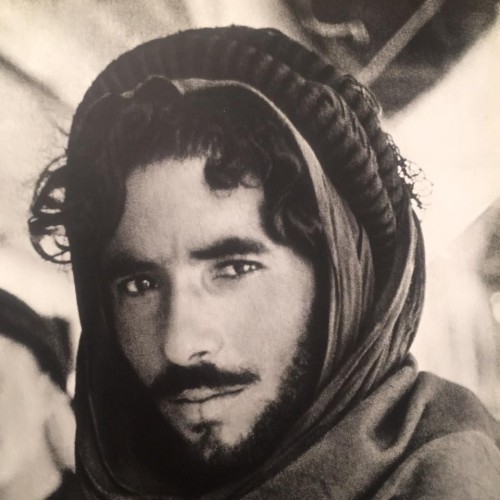
A Bedouin man at the bazaar in Aleppo, Syria.  Years later when I would watch The English Patient with Ralph Fiennes, when they referred to the Bedouin people in the movie, because of this photo, I knew just who they were referring to.
A Bedouin man at the bazaar in Aleppo, Syria. Years later when I would watch The English Patient with Ralph Fiennes, when they referred to the Bedouin people in the movie, because of this photo, I knew just who they were referring to.
Thomas Hart Benton painting The Rape of Persephone.  How gorgeous is this model?
Thomas Hart Benton painting The Rape of Persephone. How gorgeous is this model?
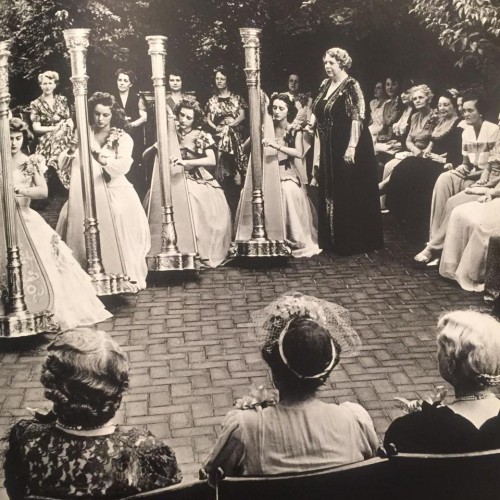
A harp concert for the Atlanta chapter of the Daughters of the American Revolution, 1944.
Sophia Loren in costume for Marriage, Italian Style, 1964.  COME ON.
Sophia Loren in costume for Marriage, Italian Style, 1964. COME ON.
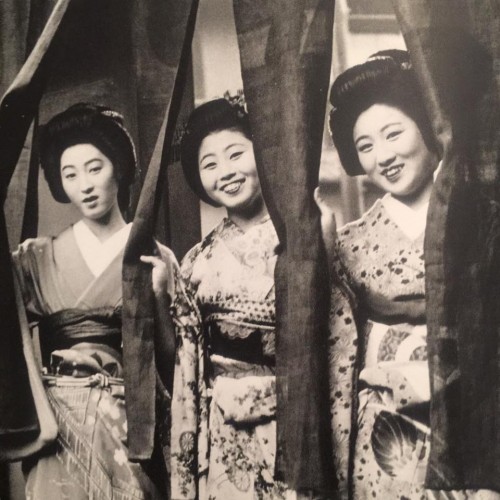
Beautiful Geishas in Kyoto, Japan.
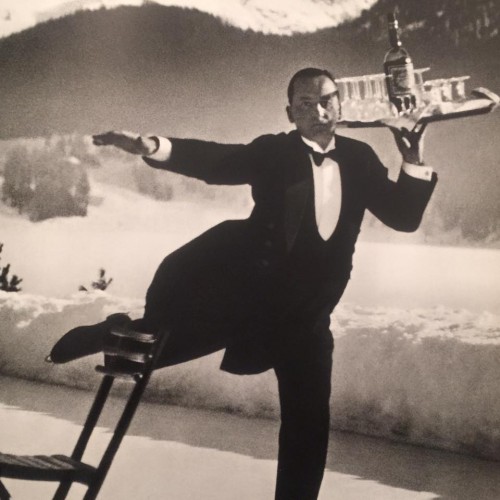
One of my most lasting memories from this book, in image that will forever inform true glamour for me, is this photo of the ice skating waiter.  In 1930s St. Moritz, Switzerland.
One of my most lasting memories from this book, an image that will forever inform true glamour for me, is this photo of the ice skating waiter. In 1930s St. Moritz, Switzerland.
The Fair family from Greenfield, Mississippi, pray over the meager, depression era lunch.
Growing up amongst European Catholics in Chicago's suburbs meant this Israeli family seemed very exotic to me.
Growing up amongst European Catholics in Chicago’s suburbs meant this Israeli family seemed very exotic to me.
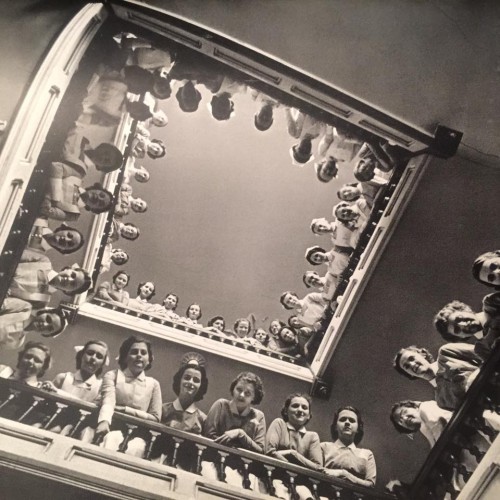
Oodles of nurses, staring and stairing at me.  I loved the composition of this photo.
Oodles of nurses, staring and stairing at me. I loved the composition of this photo.
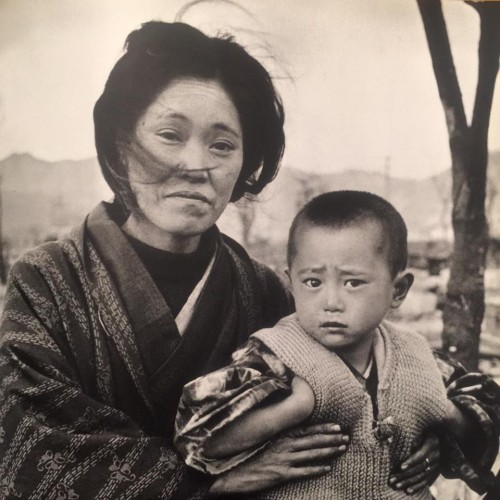
Japanese mother and child in the aftermath of Hiroshima.
Closeup of the amazing eyebrows of Edward Teller, "the father of the hydrogen bomb."  His eyes always freaked me out, especially as an entire page layout was devoted to them.  I honestly used to ponder, as a youngster, if the radiation he was exposed to made his eyebrows so unruly.
Closeup of the amazing eyebrows of Edward Teller, “the father of the hydrogen bomb.” His eyes always freaked me out, especially as an entire page layout was devoted to them. I honestly used to ponder, as a youngster, if the radiation he was exposed to made his eyebrows so unruly.


When He Was Six

In just a few weeks, my now six year old will turn seven.  I am not one of those moms who mourn their children growing older.  I can’t, simply because of circumstance. I celebrate the milestones, the independence, the sheer miracle of a child growing up.  What a blessing.

I also savor the fleeting nature of childhood, knowing that it is not a given or something to be taken for granted.  If you have a healthy, developing child, you did it — you won the lottery of life!  Hooray!

As six morphs into seven, I wanted to take a few moments to remember those things about my boy being six that I have treasured.  What an amazing age, full of curiosity, willfulness, stretching, and the wee glimpse of separation that will be his task to come in the next few years.

Six is still about unmitigated affection.  The spigot of hugs and kisses is still flowing freely.  You cuddle me at night, even though you prefer your Dad’s singing voice, justifiably so.  You happily hold my hand, and not just in parking lots or crossing the street.  You love to nuzzle on the same pillow together, reading books or brainstorming activity ideas on Pinterest.  I smell your hair and it is wonderful.

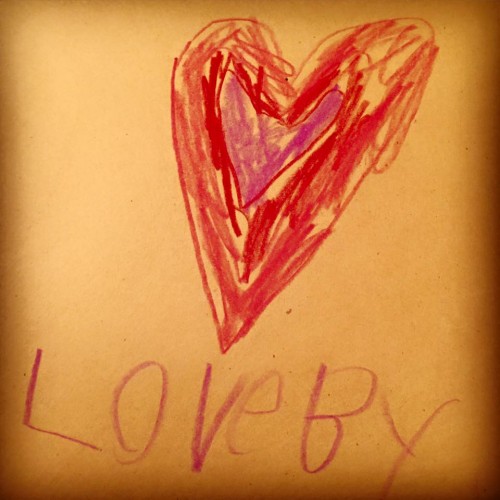
You draw me hearts even when it's not Valentine's Day.
You draw me hearts even when it’s not Valentine’s Day.

Six is about straddling that gap between being a little kiddo and simply a kiddo.  You now prefer showers over baths.  You are just as likely to want to read to yourself before bed as have Mom or Dad read to you.  You go to places like arcades and don’t require constant supervision anymore.  This stage is like the teeth that you have started losing — just as the little kid leaves or falls away, the big kid is right there, pushing in, ready to take his rightful place.

Six is about starting to navigate relationships outside your immediate family.  You have school friends now, and cousins, and neighbors.  Your world is growing and you are thirsty for it.  You are proud to think of yourself as the “playground peacemaker,” not picking sides and wishing everyone could just play together.  This was the first year Mom and Dad weren’t enough at Halloween.  You wanted to be with your friends, but knowing Mom or Dad was close nearby.

Six is seeing you absorb so much of the world around you.  You ask more questions now.  You have opinions and think Donald Trump would not make a good president (smart boy!).  You pay attention, now, when Mom and Dad are listening to morning radio.  We try and protect you from the bulk of it, at least for a wee little while longer, but those days will soon be gone.  You are more attentive to this larger world you will inherit.

Six is about grumbling and stumbling.  You make mistakes.  You require lots of reminders for basic things like changing underwear and brushing teeth and putting the book down.  That  world you’re creating in Minecraft might consume you if we didn’t require some non-screen time.  The idea of homework ticks you off.  Limit setting is not your friend.  Sometimes, you think Mom and Dad are the worst parents ever.  We get it.  We still love you.

Six is about expanding those proverbial horizons.  You’re hoping Santa will bring you a baseball glove for Christmas and for the first time ever asked for a Chicago team shirt.  Any team would do, you said, as long as it was from Chicago.  Those doubts you had about the old man in the red suit seem to have been addressed and your belief is sweet and innocent and precious. That water that terrified you just a couple of years ago is now one of your greatest pleasures.  You love to bounce and toss on the waves.  You haven’t conquered the bike yet, but that will come.  My bet is on you, six year old, and all those places you want to go.

Dice

I love you and I have loved you being six, my boy.  I love that when I told you that my elbow had knocked the tip off your most prized Lego creation yesterday your first response was to say, “No problem, Mom.  Thanks for telling me,” followed quickly by welling eyes and tears when you realized the fix would not be as simple as you thought, finished up with a sense of victory when, after a few moments, you got to concentrating and figured it out all on your own.  You are learning every day and watching that unfold is one of my supreme gifts in this life.

45 Minutes

Time is a subjective thing.  For some, 45 minutes is a lifetime.  For others, 45 minutes is a blip, little more than a blink.  45 minutes in a dentist’s chair is absolutely different than 45 minutes at a party. And 45 minutes in a car on the way there definitely feels longer than the 45 minute car ride home.

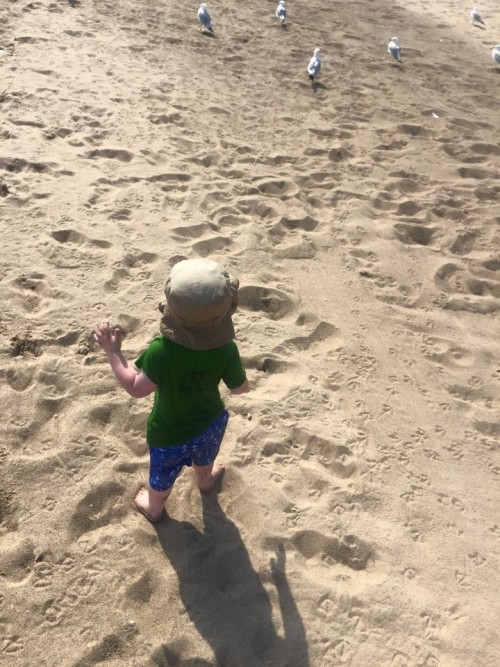
This morning I got to spend 45 minutes on the beach with my youngest.  He’s a handful, this guy.  When I would watch other moms chase after a very active toddler, I would always refer to the child as “busy,” as in, “Wow!  He’s a busy one!”  After raising two not terribly busy toddlers, I finally got a busy one.

It’s delightful.  And exhausting.  Delightfully exhausting.

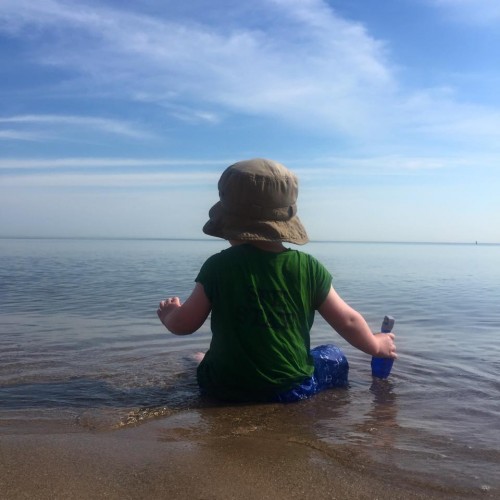
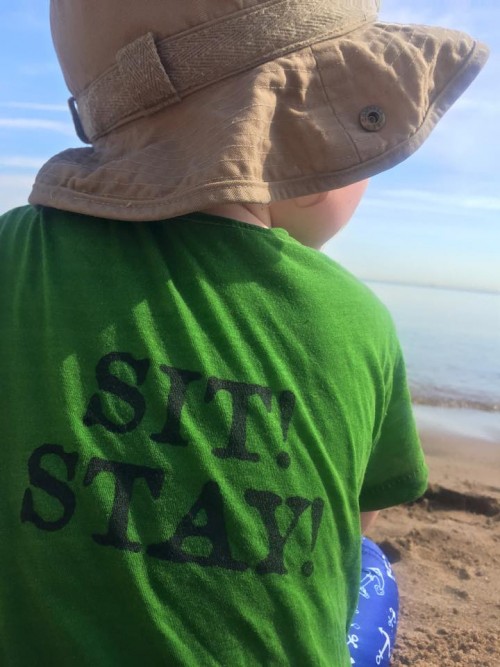
He loves the water, my little guy.  I love watching him play in the water.  He is focused when near the water, happy and content to just splash away the minutes.  Today we splashed away 45 minutes.  It looked a little something like this:

beach4

beach6

beach3

For 45 blissful minutes, I didn’t think about anything other than being on the beach with my busy boy.  Childhood cancer didn’t enter my thoughts, not even once.  Grief wasn’t at my side. My ‘to do’ list wasn’t an issue.  The moms with nannies I will surely annoy with an upcoming blog post didn’t factor into those moments.  Menu planning and bill paying and blog organizing would all have to wait.  Gun violence in Louisiana and Georgia and even my own neighborhood could do without my worries for a little while.

For 45 minutes this morning I was at the beach with my boy and that was all that mattered.  What a gift in this crazy, busy, harsh life we all seem to lead. Even the water was with me, it was gentle and calm, barely a ripple breaking its surface.

Aaahhhhhhhh.  So this is what peace feels like.

beach5

beach2

In these rare moments of stillness and quiet without distractions, you are gifted with noticing sea gull prints in the sand, or how the sun glistens just so on the water.  You have the space to think about the riches in your life that have nothing to do with money.  You breathe the gratitude in and exhale your thanks out slowly, fully.

After a while, though, you feel hot.  Unpleasantly hot.  And a little sticky, too.  Is that pink on your son’s legs?  Hmmmm.  Should I reapply sunscreen, or gather up our things, wrangle a sure to be annoyed toddler, and head for home? A good indication that it’s time to leave is when the heaviness of climate change dictates your next move.

And just like that, snap, your 45 minute allowance of peace and gratitude is over.  But it was lovely, wasn’t it?  It was.

beach1