Donna’s Cancer Story: Whiplash

This is the twenty-ninth of thirty-one installments of Donna’s Cancer Story, which will appear daily in serial format through the month of September to recognize Childhood Cancer Awareness Month.  Each post will cover one month of Donna’s thirty-one months of treatment. 

Last month ended with Mary Tyler Dad and I clutching to The Bubble.  But you can’t clutch a bubble, can you?  It just doesn’t work.  The bubble pops and — poof — it’s like it never existed in the first place.  

The day after Donna’s fourth birthday, we had a set of scans done to determine what type of effect, if any, the oral chemo was having on her brain, spine and lungs.  Late that evening we got a call from our oncologist that there was a pneumothorax in Donna’s left lung.  Left untreated, it could result in her death, suddenly and without warning, and, he said, it would not be a pretty death. 

The recommendation was to be hospitalized and have Donna treated with “pure oxygen.”  The idea is that the pureness of the oxygen would encourage the lung to seal itself, correcting the problem.  Most likely, the lesions on Donna’s lungs, those “immunerable” lesions, were eating away at her tissue.  It was unbelievable that our daughter with a brain tumor would die of lung disease.

As we had done, we used Donna as our guide.  Her quality of life was still outstanding.  As cumbersome as the meds were, she was tolerating them remarkably well and, as she was wont to do, thriving.  The docs agreed that because of that, treatment was in order.  Mary Tyler Dad and Donna packed up and were admitted that evening.  This was our first hospital stay since Indy and we opted for a man:man defense.  I would be at home nights to nurse Mary Tyler Son, and Donna and Daddy would have sleepovers at the hospital until discharge.

Well, the pure oxygen didn’t work.  Possibly because Donna hated the mask that was required for it to be administered.  When you know your child’s time is so limited, to see her in a bed strapped to a mask she fears, will wreck you.  All docs involved moved to the idea of a chest tube to drain the liquid gathering in Donna’s chest.  Ironically, it was called a “pig tail.”  Such a benign name for such a tool of torture.

It was inserted easily, under anesthetia.  When Donna came to, she was lovely and hungry.  Three hours later, after the anesthetia wore off, Donna began to experience pain.  Deep pain.  Wounding pain.  Intense pain.  Donna begged for medicine, wailing.  Nothing could be administered quickly enough.  And God love them, as hard as the team tried, as responsive as they were to her pleas, Donna’s pain was difficult to manage for twelve hours. 

Once morphine on a constant drip had been instituted, things calmed down.  Donna napped.  Mary Tyler Dad and I took a break in the hall that quickly dissolved into our own tears.  Mary Tyler Dad wrote, “We are now the scary parents at the end of the hall who have no more options open.  We feared them, and now we are them.”

Those of you who are Cancer Parents know who I am talking about.  The crying, sobbing, broken parents who wail loudly or quietly, but you hear it just the same.  When you are new to treatment, you see them and their displays in the halls — the only place available to step away from your child and the crushing news that there are no more options for their child.  You turn away because their pain is too close, too scary and too unbearable.  It is their pain, not your pain, and you don’t want to be near it.  Until it is your turn and it becomes your pain.

All apologies to the parents who witnessed the depth of our pain that evening. 

Slowly, the chest tube did its work.  The hole in Donna’s lung sealed and we went home late on a Monday night.  Tuesday was lovely.  Our girl was back!  She was the same brightful, shiny girl we remembered.  The pain seemed a steep price to pay, but the right choice to have made.  We were grateful.

Early Wednesday morning, though, Donna, sleeping in bed between us, seemed different.  Her breath was fluttery and rapid at the same time.  Shallow.  I noticed it, Mary Tyler Dad noticed it.  Moments later, Donna awoke.  “Are you having trouble breathing, girl?” I asked.  “Yes, Mama.”  We called the hospital and were told to come in straight away.  Donna was not comfortable.  Unhappy.  Listless.   

As we pulled into the hospital driveway, we ran into Dr. Stew who asked after our girl.  When he saw her, he told us he would be to the ER soon.  The docs did their thing, more x-rays.  Horrible x-rays that involved Donna sitting in a wood chair, elevated above us, with her arms outstretched, and straps holding her thin wrists to a board behind her.  Christ-like and execution-like simultaneously.   The memory of her strapped to that board will plague me until the day I die. 

Mysteriously, we got word that all was well, but she was so unhappy, so uncomfortable.  She missed her brother and grandmother.  When we showed her a photo of Mary Tyler Son, Donna slapped it away and screamed, “NO, the REAL one!”  A few moments later, upon further review, a new pneumothorax was found on the right lung.  The dreaded oxygen was advised and started again.  More masks.

Donna fell into a deep sleep.  She was unarousable.  Our team had assembled across the hall and asked us to step out and talk with them about a plan.  Mary Tyler Dad wrote at the time:

“We decided with great sadness that we will be together as a family, at home, and we will let the disease take its course.

Why? How can we do this? We’ve said often among ourselves that Donna would provide our cues. She was listless, exhausted. She wanted to be home with her brother. We have fought and fought and fought this fucking thing. It has taken the deadliest poisons and hottest burns and sharpest knives and just grew right back. No matter what, her time is limited now. We decided today that instead of trying to make it as long as possible, we will make that time as comfortable as possible.”

We said heartfelt and tearful goodbyes to these amazing humans who were responsible for caring for our Donna.  Who worked like hell to allow Donna to grow from a toddler to a young child.  Our neurosurgeon came down in her scrubs, fresh from surgery when she heard the news.  Four of our nurses from the oncology unit came down.  And our beloved Dr. Stew, who will never understand the esteem in which we hold him so dear to us. 

Science had failed our girl, not these beautiful people. 

Advance directives were signed, arrangements were made for oxygen to be brought to us.  Palliative care was quickly changed to hospice care.  An administrative box was checked and our girl would die.  Calls were made and family from the east coast scheduled flights to be with us for Donna’s death.  They brought black to wear.   

We walked across the hall, back into the ER, to find Donna resting comfortably with a favorite volunteer at her side.  Shortly after we arrived, Donna awoke.  She smiled.  She was attentive and affectionate.  We told her we were going home.  She was happy.  We took one last tour of 4 West and it was anticlimactic.  Nurses were busy with other patients.  Life moves on, even in Cancerville.

Walking out of the hospital, I felt liberated.  Fuck you, cancer. 

When we got home, Donna cheered to see her Da and Auntie.  She ate, and ate a lot.  She wondered when we would go to the Target.  When we would go to the Target?  What the what?  It never worked this way in Lifetime movies. 
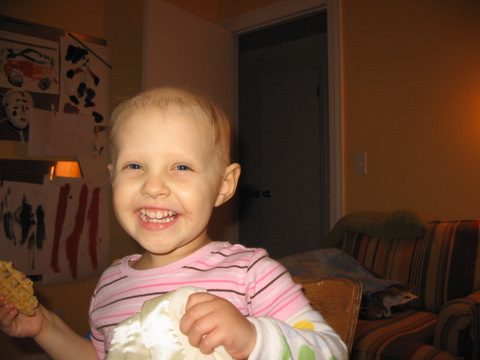
Rasberry Jam 

Well, we went to the Target.  The last thing I had said to Donna the night before was that we would go to Target in the morning.  “The one with the escalator, Mama?” she had asked, hopefully.  “Yes, Donna.”  We spoiled our girl rotten that night with Fruit Loops (“rainbow cheerios” is what Donna called them and they were contraband in our home) and frozen pizza and games and toys.  Target is still the promised land for me.

Donna woke the next day and wondered what was for breakfast.  That night she made a guest appearance at the annual Run for Gus, a 5K that raises funds for pediatric brain tumor research at Children’s.  She wore her tutu and posed with the runners of Team Dancing Donna wearing their own tutus.  Donna had some things to do and didn’t get the memo from cancer saying her time had come.  Family joined us at the event and we celebrated and were happy, so happy. 

Run for Gus

Until the Cancer Mom spoke, a featured speaker to rally the runners.  She talked about her own daughter and the brain tumor she had fought, “successfully.”  She proclaimed that she “wouldn’t let cancer take her daughter.”  Now why hadn’t I thought of that?  I had no idea it was possible to simply refuse cancer my daughter.  Who knew?  Bitter humor, I know, please forgive me, but words matter, people.  They do.

Donna woke the next morning and the next and the next and the next.  Always demanding to know, “What’s for breakfast?”  I had a hard time sleeping next to her.  I would fall asleep easily, my head searching for the comfort of girl and pillow, but inevitably, I would wake and watch Donna’s breathing.  It was anxiety provoking.  I learned to move into the living room and soothe my fears with bad tee vee.  It was easier than sitting in the darkness watching and waiting. 

Auditoreum Theater

So much more happened this month.  Donna’s guardian angel, her dance teacher, her CBLO (Chief Bucket List Officer), arranged for a private dance party for her and her playmates at the studio where she took lessons.  This same gal arranged for the Field Museum to gift Donna with a box of all things dinosaur, as Donna was obsessed with them and their bones.  And for the Joffrey Ballet Company to send along a pair of prima ballernia toe shoes, poster, and coffee table book about the Company.  And for the Auditorium Theater to open their doors on a weekday afternoon so that the sweetest dancer in the world could dance on one of the finest stages that exist.  All of these things happened just days after that last ER visit.  Life was improbably good.  We made a new bubble and climbed right in.

Tomorrow:  Choosing Hope

Donna’s Cancer Story: The Bubble

This is the twenty-eighth of thirty-one installments of Donna’s Cancer Story, which will appear daily in serial format through the month of September to recognize Childhood Cancer Awareness Month.  Each post will cover one month of Donna’s thirty-one months of cancer treatment. 

Swinging together 

During this period, Mary Tyler Dad and I opted to step inside what we called The Bubble.  The Bubble was a happy place.  Donna was with us there, so was Mary Tyler Son.  Cancer, the bastard, was not invited.  Yes, The Bubble was invitation only and it was an exclusive affair.  There was only room for four, so even close friends and family had to watch us from outside.  In The Bubble, it was always a perfect 75 degrees and sunny — kind of like San Diego. 

To be with Donna could be heartbreaking, and sometimes impossible, if we allowed ourselves to think about her death.  We learned to detach from the reality of her dying in her presence.  I think, if we were different parents, it could have easily gone the other way — detaching from Donna.  That was unacceptable.  She was like a joy magnet.  She kept us grounded.  She made everything bearable.  Mary Tyler Dad explains how The Bubble worked:

“You know, I’m able to forget how the situation is . . . that we’re teetering on the brink, with no way back when we fall.  It’s terrifying, of course, but it also reminds me to take as much delight as I can.  I love talking to Donna.  It breaks my heart that I can’t remember every single conversation we have, word for word, because they bring me such pleasure.  It’s easy to be exhausted, but it’s also easy to be delighted, and it’s vital to keep my head straight to let myself feel that delight.” 

The Bubble also had nothing to do with denial.  Mary Tyler Dad and I knew exactly what was happening.  We talked about it and sometimes allowed ourselves to imagine it together.  One day he recounted how he felt after taking six month old Mary Tyler Son for a walk to the park during Donna’s nap, “This is how it will be.  This is what life will be like without Donna.”  We both flirted with those thoughts.  Full disclosure, I had flirted with those thoughts since March 23, 2007.  Part of how I cope with hard things is to imagine them, try to feel and anticipate them, get comfortable with them. 

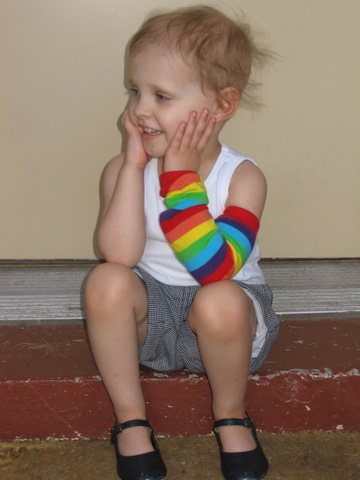
Rainbow Brite 

(Note to Cancer Parents:  baby legwarmers are fantastic picc line covers; Donna had a whole wardrobe of them that made her happy.)

So, yes, denial was not in play, but our defenses were alive and healthy.  The Bubble, because it was our defense worked beautifully.  I have some painful memories of not being very good at communicating with my closest friends or Donna’s other family during this period.  In their voices or their eyes I could see their profound sadness and loss.  I am ashamed of this, now, but shut myself down from that.  It was protective.  And, crazily, I felt responsible for their sadness.  I chose The Bubble because it was better.  Simple as that.  Donna’s sadnesses were related to silly things like having to get out of the tub too soon or Mary Tyler Son gumming up one of her books with his teething.  Those sadnesses I could handle.  We worked to maintain a schedule during these weeks, to create structure and normalcy for Donna.  The medication schedule called the shots, but we did what we could to work around them.  Normalcy and a schedule meant Mary Tyler Dad left for work in the mornings, me and the kids ran errands.  That helped preserve The Bubble, too. 

Sometimes, in the midst of the most mundane tasks, The Bubble was at risk by my wish to inform the folks we came in contact with with just what was happening.  Our dry cleaner or the nice lady at the McDonald’s drive through window or the cashier at the grocery story.  I fantasized completing our brief interactions with something like, “Hey, you know my daughter has cancer.  Yeah, and she is dying.  Right now her cancer cells are duplicating at an alarming rate and it will kill her.  Soon.  Isn’t that messed up?  I know, she looks perfectly fine!  Okay, thanks, and have a nice day!”   Sigh. 

During this month, Donna was the first child from Children’s Memorial approved for a new respiratory therapy meant to influence her immune system to fight the cancer cells specific to her lungs.  MD Anderson in Texas was calling the shots, e.g., running the study, and allowed Donna to use it under compassionate care standards, or off-study.  We were told she was the youngest child to receive it.  It is twisted when you hear that and feel a sense of pride.  The drug was leukine sargramostim and it was delivered via nebulizer.  Because it was so toxic, and I was nursing an infant, the treatments were given outside on our deck in the open air.  Mary Tyler Son and I could only watch from behind glass.  Donna would sit on her Daddy’s nap, studiously watch Dr. Seuss’s The Grinch Who Stole Christmas and Horton Hears a Who, and hold a purple dragon mask over her face while steam, the toxic treatment, escaped out the dragon’s nostrils.  This was a learned skill for Donna who historically hated masks.  She did what she needed to do.  As we learned from one of her favorite books at the time, this made her brave.  Yes, my girl was heartbreakingly brave, each and every time it was asked of her. 

Our days became a bit of a maze working around medications, but still, Donna’s quality of life was excellent.  She was sunny, funny, clever, bright, feeling well.  She loved her brother and liked nothing more than to stand over him and make him laugh with her protracted spelling of his name.  It never failed.  She would shout his name, then proceed to spell it, with squeals of delight pouring out of her baby brother.  The more he squealed, the more Donna rolled her letters.  That six month baby boy loved his sister so.  His eyes would naturally gravitate to her whenever they were in the same room.  They loved one another.

Brother and Sister

Often during these weeks, I would have to cancel or postpose hospice visits.  Technically, they were palliative visits, as Donna remained on treatment.  The fact that it was understood the treatment would not result in cure was immaterial.  The nurse or social worker would call and ask to come by.  “I’m sorry,” I would say, “We’re off to the acquarium, zoo, dinosaur bone museum, insert attraction of your choice here.”  They were imminently patient with us and I was grateful for that.  God bless home nurses and the work they do, but that job is just inherently difficult to schedule.  We knew from years of experience that if you schedule a home visit, you will wait.  Donna was too busy to wait.  She did not have time to wait. 

Donna’s fourth birthday was this month, too.  As lovely as The Bubble was, this birthday, her last, almost broke me.  I knew there was a lesson to be learned in having a terminally ill daughter who did not feel sick, but trying to learn that lesson with the artifice of “HAPPY BIRTHDAY!” was so very hard.  It felt cruel.  Donna’s birthdays had never been easy.  On her first, I was downed with a migrane.  On her second birthday, the idea of a third was questionable.  On her third birthday, we were planning a surgery just days later, thinking a fourth was unlikely.  On her fourth, we knew she would not see a fifth.  During these days, Donna started using the phrase, “When I’m 8, I will do this,” or “When I’m 10, I can do that.”  A piece of me died each time she said it. 

Four at Candlelite

But Donna did not know her fate.  She was a child proud to be growing up.  She was four!  She deserved a party.  She wore a hat.  We had some playmates over to build pizzas.  We smiled and ate cake and celebrated.  We went to the joy with Donna, clutching The Bubble the whole way. 

Tomorrow:  Whiplash

Donna’s Cancer Story: Terminal

This is the twenty-seventh of thirty-one installments of Donna’s Cancer Story, which will appear daily in serial format through the month of September to recognize Childhood Cancer Awareness Month.  Each post will cover one month of Donna’s thirty-one months of cancer treatment. 

Tiny Dancer

(All photos courtesy of Joel Wanek, Joel Wanek Photography)

In her last week of treatment, a lump was detected in Donna’s neck by the staff at the proton beam radiation center.  At the end of her morning treatment, I was called back to the recovery room, just as I was every day.  Greeting me, standing over a still sedated Donna, was one of the medical directors.  Oh, no, I thought, what is this?  There was no suspense involved,  “I see a lump in her neck and it is suspicious for tumor,” he said.  Just like that.  The pit that exists in every Cancer Parent’s gut grew from a pea to a watermelon for me within moments.  I had seen the lump in question in passing the night before.  Donna was in our room with her playmate and I was walking out into the hall when I turned around to say goodbye and saw it.  A fear flashed in me, but Donna’s neck turned and it was gone.

Except it wasn’t gone.  It was there and it was suspicious for tumor.   I knew it.  I felt it.  It seemed impossible, as we had had clean scans just fifteen days prior, but cancer knows no boundaries.  It does what it wants when it wants.  True fact.  The suggestion was made to head over to the local hospital for an MRI.  One of Donna’s sedating doctors who had treated her previously was there and had generously agreed to stick around and sedate her for the scan.  We could take her right away.  A dual sedation is never recommended by medical professionals, that’s why Donna had her picc line inserted without it, but in dire cases, you do what needs doing.  Clearly, this was a dire case. 

I called Mary Tyler Dad at home in Chicago and caught him on his way out the door.  He drove directly to Bloomington to meet us at the hospital.  He made record time.  I felt terror.  If you have not felt terror, you don’t ever want to, and if you have felt it, you know precisely what I mean.  Images seem to work better than words, so you can think of it as a swirling, growing, angry hurricane of hell in the middle of your gut.  You are powerless. 

Thankfully, Auntie was with us and came to the hospital.  I don’t remember getting there.  I do remember registering.  Sitting with my family in a waiting room, such a benign, innocuous space.  I don’t remember my children there.  I remember my sister and her knitting bag resting on a chair.  I remember bringing Donna into the MRI room, but not dressing her in a gown or her being re-sedated.  I remember the kind face of the doctor who had sedated Donna numerous times at MPRI.  I remember sitting in the cafeteria with a turkey sandwich in front of me, but not how I got there or how it got there.  I remember Mary Tyler Son wailing, and me not being able to hold or comfort him.  I remember Mary Tyler Dad finding me and holding me.  I remember splitting the sandwich and it tasting like lead fabric.

The scans were complete and we all joined Donna in the recovery room.  She was hungry and ate french toast sticks and syrup.  We were both sticky as she was sitting on my lap.  We were discharged and a friendly nurse wheeled me and Donna out the door to the car, “Hospital policy,” she cheerfully remarked.  In the car on the ride home, we heard from Donna’s doctor in Bloomington that the lymph node was not attached to tumor.  It could be cancerous, but it was not the tumor we had been treating.  That brought comfort.  The plan was to finish out the week and follow-up with our team at Children’s in Chicago.  This put a pall on our last week of treatment and our remaining time at Jill’s House.  Of course, it did.  For Donna’s sake, we worked hard to focus on what she had accomplished.  53 proton beam radiation treatments spread out over twelve weeks.  We had lapped every other guest at Jill’s House.  All our neighbors had moved on and back home. 

Donna’s going away party was lovely.  Our closest friends, the manager and her children that lived onsite, were there and kept us from jumping off a cliff.  There was pizza and decorations and a dance party.  Oh yes, a dance party.  I have such a beautiful sense of that last evening, spent in the company of dozens of people affected by cancer.  Some young, some old.  We all danced together.  We put bean bags on our heads and pretended to be sleeping fish.  All of us.  You have not fully lived until you have danced with young and old alike. 

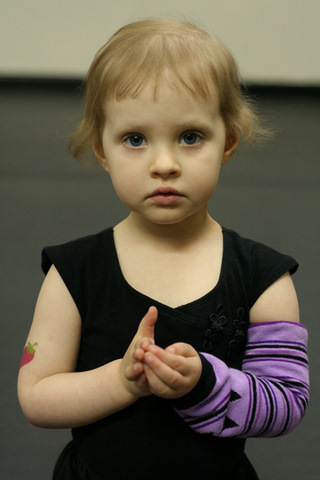
Obituary Photo 

We got home late on a Tuesday night.  On Wednesday morning we headed to Children’s to meet with Donna’s oncologist.  Within minutes it was clear that there was concern.  It was confirmed by the look in Dr. Stew’s eyes.  He is an outstanding human being, that man, but he does not have a poker face.  We met with a surgeon and had a CT scan of Donna’s lungs.  In hospital time, those things take days or weeks to schedule.  Unless your daughter is dying.  Then, it is mere minutes.  After the scans, we were sent home to await the results.  I dropped Mary Tyler Dad at home with the kids and went along to the grocery store.  We weren’t even home long enough to get milk and bread before the call came.  Donna’s lungs were covered with lesions, her lymph nodes were full of cancer.

I got the call driving down Touhy Avenue, the milk and bread in the trunk.  I had to pull over.  It was Mary Tyler Dad who called me.  I called Dr. Stew immediately.  There was nothing to be done.  The forecast called for a good summer, possibly fall, but Donna would die.  It was the first week of June. 

The plan was to put Donna on an oral chemo that could eek out several more months, we hoped.  She was completely asymptomatic, so preserving time was the goal.  If the oral chemo was easy enough for Donna to tolerate and had the chance of extending her life by weeks to months, we decided it was worth it.  No more hospital stays.  No more scans.  The cancer would run its course, but with Donna living so vitally, we wanted to prolong that as long as possible.  Dear Donna.  My daughter was dying of cancer and to look at her was a total disconnect.  Dr. Stew had said once of her, “She may have a brain tumor, but she is not a sick child.”  He nailed it with that statement.  Donna had lived with cancer since she was twenty months old, but it never prevented her from growing, learning, developing, being a child.  That was one of our blessings. 

I wrote at the time:

“Today, right now, she is not suffering.  She is chatty, hungry, silly, thoughtful, playing catch and riding her tricycle.  Two years ago this week, when it was first learned that Donna’s cancer might have spread to her lungs, we had a prognosis of 2-3 months.  If someone had said on that day that Donna will survive two years plus I would have thanked my lucky stars.  Now that that time has passed, I remain grateful, but hurt in my bones that more can not seemingly be done to right the terrible wrong which grows inside her.  It is so wrong to lose a light this bright, a girl this loving, a daughter and granddaughter and cousin and friend, and sassy willful wonder.  I ache.  We ache.  But there is not a lot of time to ache right now as Donna still thrives.  We must connect to that while we can.” 

And so we tried.  Her VP-16 was disguised in pudding and her Temodar was disguised in ice cream.  These are meds that an adult would swallow in pill form, but Donna was too young for that.  Instead, I put on blue rubber gloves to protect my skin from the poison I stirred into her pudding and ice cream.  God help me.  Donna would sit on her Daddy’s lap and we would all resign ourselves, the three of us, to what was done in the name of preserving the life she had in her.  Like most young children, Donna did as she was told.  It is heart wrenching to spoon feed your daughter poison that you know, at its optimum, will provide a few more weeks to her cruelly young life.  But that is precisely what we did.  A wise RN told us early in that if we let her, Donna would be our guide.  We let her, and it was clear to us that Donna wanted to be with us still, despite the injustices of a mother and father spoon feeding her poison laced ice cream and pudding.  Seconds after the last spoonful, Donna would pop up and out of her Dad’s lap and race to the kitchen room or play room or to her brother.  Yes, she was our guide.

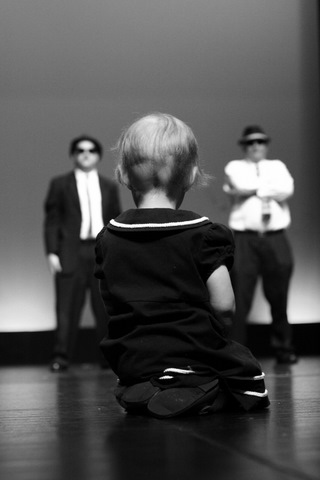
Several weeks later, Donna danced in her studio’s annual dance recital.  It was Father’s Day.  Her hair had started to thin, she would lose it again, we knew, and some low grade fevers from the chemo had started.  Donna had practiced her dances throughout her time in Bloomington.  When we returned, she joined her classes again.  Her teacher and studio could not have treated us with more kindness, sensitivity, or love.  Donna and Mary Tyler Dad were given private lessons to perform with some others in the Daddy-Daughter Dance.  It was Donna’s favorite.  The studio director made certain to accommodate Donna on this day with the knowledge that she would never dance publicly again.  We had reserved seats in the audience.  We got to watch a dress rehearsal so we could see Donna on stage more than once.  A professional photographer was brought in to capture the day for us.  All of this was discrete.  My guess is that the folks in that audience who knew Donna was dying were sitting in the row reserved for our family.  We remain grateful for this beautiful gift of a day where Donna was just another girl, nervous to dance in her first recital.  

Blues Brothers 

Somehow we sat in that audience of over 500 proud and happy parents and we watched our girl, knowing she would leave this world much too damn soon.  Somehow we didn’t wail or convulse or vomit.  Somehow we kept this news to ourselves, stifiling the urge to yell and scream and rail at a universe that could be so cruel.  Somehow Mary Tyler Dad performed with Donna, his Father’s Day gift that must last a lifetime.  Somehow you’re still reading this note.  Somehow I’m still here to write it.  Somehow my beautiful Donna is not with me.

Tomorrow:  The Bubble