
Yesterday marked six years since we moved to Cancerville, when our Donna was diagnosed with a rare and aggressive brain tumor, papillary meningioma. I write the name of the bastard because it is so neglected in the cancer world that there is no treatment for it. I like to call it out by name.
Yesterday was quite a different day than March 23, 2007. On that day, I awoke in a huge hospital room at Children’s Memorial in Chicago. There were six beds total in the room and it was on a respiratory floor. We were there because we had been hastily admitted the night before and it was the only bed available. Donna woke about 5 AM and vomited. I cleaned her up and sometime later was changing her diaper. I said to her what we always said during that routine, “Change your diaper, change your life!” It was one of our bits. She repeated it back to me, as she always did, but her words were slurred. Something was wrong. Terribly, terribly wrong.
Within moments, Donna crashed. Unresponsive. Just a little sack of potatoes in my terrorized arms. I called out for help, I rang the nurses. I called out for help again. The other parents in the room, all bleary and scared, looked at me without words. Their fearful eyes spoke volumes, though.
Within a couple of minutes a PICU doc was in the room. Dr. Kane was his name. He told me to follow them and I did. We ran through the halls. Or did we? I honestly can’t remember. I also can’t remember when Mary Tyler Dad got there. I called him at home after Donna vomited and we lived about 20 minutes away. I do, though, firmly remember him at my side when we learned from Dr. Kane just a few minutes later that Donna was sick. Very sick. “There is a mass in your daughter’s head.”
That is the moment we moved to Cancerville.

To mark six years in this place is both remarkable and perfectly ordinary. Cancerville is where we live, where we will continue to live. Like our zip code, it just is what it is. We have changed neighborhoods in Cancerville in the six years we have lived here. That first day six years ago we moved to a sub-division called Diagnosis Estates. Today we live in Grieving Heights, the least desirable sub-division.
But yesterday was a very different day than March 23, 2007. The sun was shining. The air was cold, but the warmth of the sun was so welcome after this long winter. Mary Tyler Son had dance class. His class meets in the Donna Quirke Hornik Studio, renamed after her death. He doesn’t have the same relationship to dance that his sister did. It’s been a noble experiment. No doubt he will opt for soccer or karate next year. I will miss the weekly walks to dance class, a sweet connection to Donna.
After class we headed to Honda of Lisle to accept one of those awesome cartoon sized big checks. $500 for Donna’s Good Things, the charity we started during Donna’s vigil. We had won their February charity contest. Lots and lots and lots of folks voted for our charity to win the prize (Thank you!). $500 will fund a scholarship at Performing Arts Limited for a year, including recital costume. One more child dancing. That was a real pleasure.
Well it turns out the dealership is right down the road from the Morton Arboretum. After lunch, we drove over, with the thought that it would be good to get outside and let the boy get his ya yas out. We were greeted with the acorns that flank the entry into the grounds. Then more acorns. And more. Mary Tyler Son ran and jumped and climbed and crawled. The sun felt warmer, the air felt clean. The cold seemed to melt away along with the piles of snow everywhere. Drip, drip, drip.
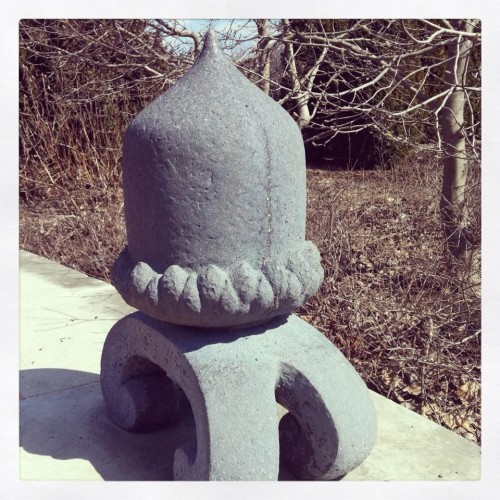
This was a much better day than six years ago, despite Donna’s absence.
There is something to be said for acceptance and integration. There is something to be said for “going to the joy,” which is what a dear and wise friend who herself knows great loss encouraged us to do. While the sadness of losing Donna will never leave us, it has not prevented us from living. Feeling the sun on an early Spring day, appreciating a boy growing bigger than his sister ever was, seeing the simple beauty of an acorn.
Acorns have great meaning for me. This wasn’t always so, but on Donna’s 5th birthday, the first birthday after her death, two of her little playmates each gifted me with an envelope of acorns. These two little girls, both four at the time, found the acorns and told their moms to give them to me. One of these little beauties was emphatic in telling her mom that the acorns were for me to remember Donna. Her mom tried to explain that I would remember Donna always even without acorns, but the girl was clear — I needed those acorns to remember Donna. Case closed.
On that fifth birthday we got friends together at Candlelite Chicago, a local place we celebrated often with Donna. I was miserable. Why on earth did we think having a pizza party on Donna’s birthday was a good idea? I put a smile on and got through it. The two envelopes were given to me at the party, but I didn’t open them until just before bed. Two envelopes with acorns in them. One from Evanston, one from Michigan. What were the chances of that?
Oh a whim, I Googled “acorn symbolism.” Within moments, I was a ball of messy tears. It felt that Donna was speaking to us personally, though her friends. The most commonly accepted meanings of acorns include:
- potential
- strength
- power
- protection
- luck
- immortality
- life
I know that it is so easy to see what you want to see, feel what you want to feel, but in that moment, I believe with complete confidence that Donna was communicating to us. She wanted us to be strong, to live life, to feel blessed and protected. And I did. And I do.
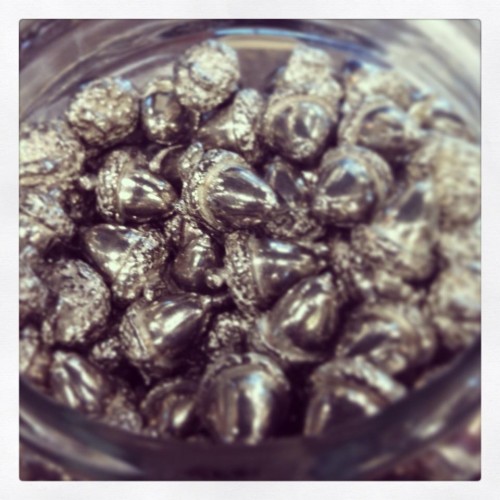
When I see acorns now, I feel Donna. They remind me that she was here, that she, like an acorn, was small, but mighty. “From little acorns do mighty oaks grow.” This quote is common and has been around for centuries. No one has correctly attributed it. Donna was our little acorn. Donna’s Good Things is the oak that we are nurturing that it might grow big and strong and mighty, taking the potential of one small acorn and realizing it in a tree that brings continued life. Oak trees grow, even in Cancerville.
So, yes, yesterday was a meaningful day for our family. Six years in Cancerville. But there was Donna, in all the acorns. She was in other places, too.
She was in her brother’s smile and joy as he climbed the rope bridges.
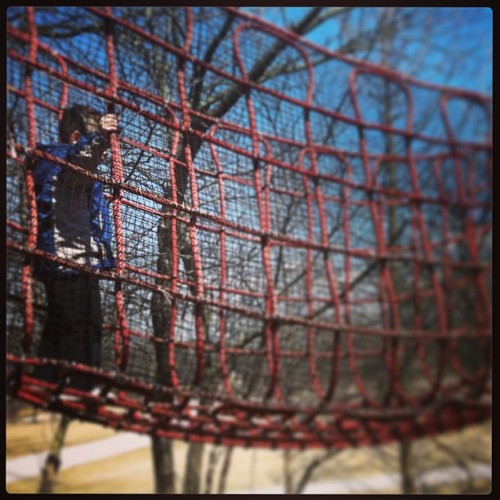
She was in the sun that shone so brightly.

She was in our love and happiness.

Acorns and Donna are everywhere . . .
If you like this and want some more of it, subscribe to get all my email posts. Here’s how . . .
Type your email address in the box and click the “create subscription” button. My list is completely spam free, and you can opt out at any time.


 Mary Tyler Mom