The Second Kind of Help

This blog post is part of a ChicagoNow network wide “blogapalooza” wherin any ChicagoNow blogger writes about the same topic provided by our community managers.  Only catch is that we don’t get the topic until 9 p.m. and have to publish by 10 p.m.  It is ON, baby.  Today’s topic:

Write about a time you helped someone, or a time that you received help.  

“The second kind of help,” is a phrase my husband taught me about.  The origin actually comes from a Shel Silverstein poem called, aptly enough, “Helping.”   That bald headed freak Silverstein was a genius, save for his completely awful and misogynistic, The Giving Tree (but that right there is a whole other blog post).  Here it is:

Agatha Fry, she made a pie
And Christopher John helped bake it
Christopher John, he mowed the lawn
And Agatha Fry helped rake it

Now, Zachary Zugg took out the rug
And Jennifer Joy helped shake it
Then Jennifer Joy, she made a toy
And Zachary Zugg helped break it

And some kind of help is the kind of help
That helping’s all about
And some kind of help is the kind of help
We all can do without

Helping, Shel Silverstein

The point of this post is that we all know some of those Zachary Zugg characters.  You know the type.  They mean to help, are always ready, willing, and able to help, but somehow, their help is not so helpful.  It’s the second kind of help they provide.

Some of those Zachary Zuggs might even be wee little ones that we are charged to raise and parent for life.  One of our jobs as parents is to turn our little Zachary Zuggs into Jennifer Joys and Agatha Frys.  And while that sounds like I am pushing a transgender agenda, I’m not — not that there’s anything wrong with that — LGBT FTW!

Okay, so the second kind of help with the wee little ones.  A perfect example is kids in the kitchen.  I know that better moms than me have an amazing capacity to have their little ones help with dinner or baking projects.  Ugh.  I suck at that.  I really do.  I try, but rarely succeed.

Mary Tyler Son gets his little apron on and we sidle up the Learning Tower to the kitchen counter.  I have already laid out all necessary ingredients like flour, sugar, butter, and eggs.  There is nothing that could go wrong with a two, three, or four year old and open containers of flour, sugar, butter, and eggs, right?  Right.  It never fails that the moment, the second, the instant I turn my back to rinse a bowl or grab a paper towel, BAM!  POW!  KABLAMMO! All hell breaks loose under the guise of wee little Mary Tyler Son “helping” by pouring flour, sugar, butter, and eggs all over the damn place.
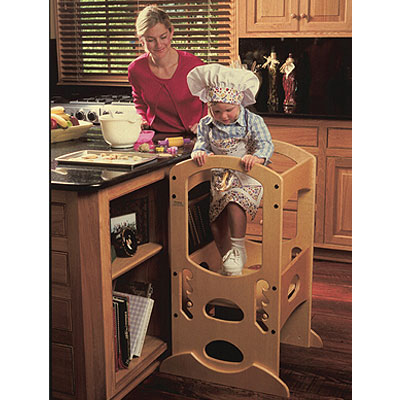
The Learning Tower, or as I call it, "The Throw All Your Junk When You Walk In the Door Tower"
The Learning Tower, or as I call it, “The Throw All Your Junk When You Walk In the Door Tower”

See?  The second kind of help.

As a parent, part of the gig is to harness the child’s wish to help, that real honest and goodness need to help, into actual help.  It takes time and patience.  And more than a few broken eggs all over the kitchen counter.  And so, our Learning Tower gets cleared of coats and purses and diaper bags, and Mary Tyler Son gets to help.  Or, you know, “help.”

Being a parent is a tough gig.  There is much to master and the stakes are high.  Like, really high.  Like, you want to produce happy, healthy, contributing members of society high.  That’s pretty high.  And part of that means learning how to tolerate the second kind of help without a scowl or a sigh or an eye roll.

Like I said, this parenting is a tough gig.  Just remember, though, that it’s our little Zachary Zuggs and Jennifer Joys and Agatha Frys that will be helping us someday.  And we definitely don’t want the second kind of help then. Best put the time in now and teach our kids how to provide the first kind of help.  The good kind.

I’m gonna go clear the junk off our Learning Tower right now.

Gravity: Movie Review for the Grieving Parent

Picture this:  The grandparents are in town, we’ve enjoyed lots of great family time and fall activities with our two boys, and it is suggested that Mary Tyler Dad and I take a few hours for ourselves and go on a date.  No need to twist our arms.  Based on buzz and glowing reviews, we decide to see “Gravity” in 3D on the IMAX screen.  Date nights are few and far between right now, so we were all in.

Gravity

SPOILER ALERT — you’ve been warned.  

After nachos, a soda so large Leslie Knope would disapprove, and twenty minutes of previews, we prepare to enter space.  We expected a film that looked like the previews, full of terror and thrills and beautiful people in space suits.  All we wanted was a few hours of escapism and the opportunity to be transported.

Yeah, not so much.

SPOILER ALERT — no more warnings. 

Shortly into the movie, it is revealed that Sandra Bullock’s character, Dr. Ryan Stone of Lake Zurich, Illinois (a local, yo), is the grieving mother of a four year old daughter who died in a playground accident.  As Mary Tyler Dad put it so effectively in a Facebook status update,

Just saw GRAVITY. Very, very good, recommend it highly. But. Explain to me how a movie set among astronauts in space has a dead four-year-old daughter in it?

When this particular plot device was revealed, and make no mistake, the presence of a dead child is indeed an often used plot device, Mary Tyler Dad and I looked at each other in the darkness in a moment of solidarity. What can you do?  We knew in that instant that this would be a different type of movie experience than for those sitting around us.

What we didn’t know, what I didn’t know, was how profoundly moved I would be by Gravity, how completely and thoroughly Sandra Bullock’s space crisis is the perfect metaphor for grief, and how absolutely director and writer Alfonso Cuarón captured the pain of child loss and intense grief that parents experience.

Leaving the movie, I was dizzy and exhausted, but I also felt understood, seen, and that I had just witnessed truth.  This is a rare thing in filmmaking.  Days later, I feel grateful for the experience.  I want to sit down across from Cuarón, weep in his presence, and let him know how grateful I am to him for capturing something so profound.

I know, I gush, but it’s true.

When we got home, both of our little ones were asleep.  I couldn’t wait to tuck myself into bed, in the dark and quiet of our bedroom, and Google reviews for Gravity.  What a colossal missing of the mark did I find.  Rotten Tomatoes gave Gravity 97%, but most every review focused on the visuals, the experiential aspect of the movie.  A few loved it, but dinged it for lacking plot.  Some thought the presence of a dead child was contrived.

UGH!  Wrong, wrong, wrong.

One particular review really got to me.  This is an excerpt (italics are mine) from Stephen Carty of Flix Capacitor:

A straightforward tale of survival, the film is decidedly slight when it comes to narrative and character, lacking the kind of underlying layers that might compel you to watch it again. In fact, it could be argued that there’s not much more to the story than Bullock drifting from one space-based predicament to the next. Undoubtedly, each and every predicament is so spectacularly realised that many viewers won’t care. They’ll just enjoy being pulled along for the ride. But on a deeper level there isn’t much to think about, with Cuaron offering little in the way of thematic weight or high-minded ideas. There’s nothing inherently wrong with such an approach, of course, but the end result is never particularly involving in an emotional sense, despite the best efforts of both Sandra Bullock and George Clooney.

Methinks, blessedly, Mr. Carty has no personal experience with the death of a child, cause for me, Gravity was an intense experience both visually and emotionally.

For those of you who have seen Gravity, what most sticks with you?

  • My guess is it might be the moments of sheer terror and isolation in the vastness of space, Bullock untethered, drifting, lost, spinning uncontrollably, with no anchor or sense of where she is or if she will survive.  
  • Maybe it was her tenacious capacity to survive, her ability to stay in the game, her strength, her perseverance, her reaching, grasping, clinging to anything she could that would get her where she needed to be.  
  • Perhaps it was those quiet moments in the Russian space station when she resigned herself to her fate, her own death, the shutting down, her embrace of her own ever after, the haven to be found in nothingness, and then the sudden appearance of Clooney, so calm, so reassuring, encouraging her to stay, inviting Bullock to find purpose and stay.  
  • There is the newfound resolve to survive, to remain, to return to that place of before, where you belong, but the only thing to get you back to that place is your gut, and a few manuals and buttons written in a language you don’t understand, and your will.  
  • Or for some it might be the heroic hurtling through space, the impossible trajectory of speed and pressure and reentry, the movement towards the unknown, but wanting it, risking everything for it, choosing hope with every cell in your body.  
  • And then there is land, the grasping of sand and water, blessed terra firma, finding the capacity to stand, to walk, to move forward, not knowing what you would find, but moving just the same, impossibly forward, only forward, triumphant, powerful when stripped of everything, transformed but still here, still standing.  

This, my friends, is grief, in its purest of forms.  The predicament Bullock’s Dr. Stone finds herself in so closely acts as a metaphor for intense grief, that I cannot shake it.  Instead I embrace it, mulling it over, again and again, grateful for the opportunity to watch it, see it, feel it again through the comfort of dark, soda and nachos at my side.  Bullock’s crystalized tears that gently float off the screen were not overkill, they were my tears, the tears of every parent who survives loss.

The grief of child loss is lonely and terrifying and steals the only anchors you think you have.  It unhinges you, flings you into this vast space that few others have seen, let alone walk through.  Child loss is disorienting, isolating, foreign, vast, unending, transformative, impossible.  The parent that survives this grief is not the same parent, not the same person.  You know things about yourself and the world that can never be unknown, ever again.  Your eyes are opened, your heart is exposed, worn outside your body for the rest of your days, your capacities tested in ways you never imagined were possible.  You are different, stronger, knowing, fierce, changed.

Grief in space -- terrifying, untethered, freefalling
Grief in space — terrifying, untethered, freefalling

If any of you, dear readers, wonder what it is like to lose a child, watch Gravity.  Know that while extreme and visually fantastic as it may be, it fully, completely, and truthfully captures the grief of child loss.  And this is not a plot device, this is not a vaguely sexist tool used to make Bullock more vulnerable, cause I will tell you that there is nothing stronger than a mother who survives the loss of a child.  Nothing.

Make no mistake about it, Gravity is a visual and emotional and glorious depiction of grief, which happens to be set in space.  Truth.

Do You Have a Gun at Home?

“Do you have a gun at home?”  That is a very personal question, and believe me when I say I wholeheartedly embrace your right to do as you see fit with gun ownership, a constitutional right in America.  And don’t feel the need to answer, as honestly, it’s none of my damn business.  But that question is food for thought, and I love few things more than making people think.

This is a gun.
This is a gun.

The first time that question was posed to me was in my pediatrician’s office, just day’s after my oldest child was born.  It was shocking, honestly, and frankly, kind of abrasive.  “No,” I answered, and the doc moved on to other questions like do we have a carbon monoxide detector or do I smoke cigarettes and where do we store our cleaning supplies.

Later, eight years later, actually, my pediatrician still asks the same questions with every visit.  It no longer shocks me and it doesn’t feel abrasive.  As I got to know him better I have come to ask him about his questions and why he keeps asking them, specifically the gun question.  He is a kind and gentle doctor, passionate about child care and well being.

Our discussion was not one about gun control or politics or NRA.  Our discussion was about child care and safety.  He asks the gun question, repeatedly, just in case something changes, just in case we purchased a gun, just in case we don’t know about gun safety around children.

God love him.  I can respect a doctor like that.

I heard a report on NPR within the past year that some folks in Florida were trying to make a pediatrician’s ability to ask that question illegal.  Can you imagine?  Someone wants to make it illegal for a doctor of children to work with parents to ensure the safety and well being of his or her patients.  That same law would make it illegal for a psychiatrist to post that question to a patient with mental illness.  As a former clinician, I know full well that when a patient is suicidal and you have an oath to protect said patient from harming himself or others, you sure as hell want to know about that patient’s access to guns.

What in the Sam Hill are we doing, people?

People can say it is not a gun issue, that it is a mental health issue.  You know what?  I agree that our mental health system in America is broken.  BROKEN.  Like many families in America, mine has been more than touched by mental illness.  I am really quite aware of how little support there is for the people we love who deal with mental illness.  But for the same camp of folks to shout off the rooftops every time there is another gun crisis in America that the real issue is mental health and then turn around and work actively to tie a psychistrist’s hands from assessing a mentally ill patient’s access to guns?  Hell freaking no.  NO.

Yesterday, on my personal Facebook page, I posted a salute to teachers that basically gave them props for not only teaching our kids, but teaching them while dealing with every social ill our children deal with (poverty, drugs, hunger, abuse, negligent parenting, etc.).  Now, it seems, the social ill that teachers are increasingly forced to deal with are guns and violence in their classrooms.  Never in a thousand years would I have thought that my innocent salute to folks who are under appreciated would be met with disagreement, but sure enough, yep, folks somehow managed to disagree with my salute to teachers.

Boggles my damn mind, I tell you.

I am all for live and let live and it is not until we listen to those who disagree with us that any progress is made or any middle ground can be found.  So I listened and considered the comments that were popping up on the thread.  Lots had to do with the issue being mental health and not guns, some blamed poor parenting, a few suggested that box cutters were just as lethal as guns and should we ban box cutters and butter knives, too?

You know what?  Despite my whole live and let live mantra, fuck that.  You heard me.  Fuck.  That.

Here I am today saying I don’t care if you have a gun or not.  It is none of my rootin’ tootin’ business.  But I am begging of you, pleading with you, that if you do have a gun at home, please treat it responsibly.  That means your kids do not have access to it.  That means that the bullets are stored separately from the gun.  That means that the weapon itself is kept in a locked box, unloaded, and out of reach of a child’s hands.

These guidelines do not come from me or my pediatrician.  Google “gun safety with children” and you will see a pile of gun advocates who stand by the same guidelines.  These guidelines are nothing more than good parenting, safe parenting, responsible parenting.

It is not okay for an eleven year old to have access to their father’s gun.  That is a problem.  It is not okay when a two year old accidently shoots herself in her face.  It is not okay when a four year old shoots and kills his little brother with the loaded gun that was left on the bed.  It is not okay when a child who shoots and kills a teacher then himself is referred to in media reports as the “gunman,” because he is not a man, he is a child, but nobody ever refers to a “gunchild.”

None of that is okay.  And all of us should have a problem with it.  Truth is, many of us don’t.

Here is my new theory about guns and violence and legislation.  We all know what a bunch of yahoos work in Washington D.C.  They can’t manage to sit across from one another amicably let alone pass effective legislation on such a hot button issue.  Let’s leave Washington and politics and legislation out of this discussion, agreed?

Instead, each of us, right here and now, whatever way you feel about guns, let’s make a pact to practice gun control at home.  For some of us, that might mean no guns.  For others here, that might mean reviewing our handling and storage of guns.  Case closed.

It can be as simple as that.

As for the other stuff, whether or not doctors should be allowed to enquire about guns in the home, or what leads an eleven year old boy to shoot to kill, well, those are things we can not address right here and now.  But gun control at home?  Yep.  We can do that — each and every one of us — no matter where you stand on the gun issue, we can tackle that one right here and right now.

We start with this question:  Do you have a gun at home?

Hey!  If you don’t mind a mom blogger with an opinion, I’m your gal. You should subscribe.  Here’s how:

Type your email address in the box and click the “create subscription” button. My list is completely spam free, and you can opt out at any time.