Isaac’s Story: A Nest Filled with Love

September is Childhood Cancer Awareness Month. Each day a different guest blogger will be featured who will generously share their personal experience with childhood cancer.  Stories are always more potent than statistics.  

By Sarah Steiner

I held his hand as he died.  Just as his time in the womb was just between me and him, so was his time of death.  After he took his last breath I told him over and over and over again that I was so sorry that all of the love the world sent his way wasn’t enough to save him.  And now, eighteen months later, I’m still so very sorry.

Isaac was the second of three boys.  The first five years of his life were filled with all of the normal things that make up early childhood. Learning to get along with siblings, playing with friends, developing his own special interests (Dinosaurs and Legos), the routines of preschool and church and extended family.   Isaac loved to help his Dad with yardwork and he loved to help me in the garden.  Isaac loved to travel to the ocean, the mountains and anywhere we took our pop-up camper.  He was a bright,  attentive, inquisitive and beautiful little boy with a world of possibilities in front of him.

And then a malignant brain tumor got in the way.  On June 6, 2011 Isaac was diagnosed with Medulloblastoma.  A “friendly” kind of pediatric brain cancer with a 90% five-year cure rate.  We held on to that statistic while our precious child endured brain surgery and proton radiation and a year of chemotherapy.  During this time Isaac turned to Legos as his form of therapy, went to kindergarten as much as he could and rarely complained.

I was exhausted as I shuffled him to doctors appointments and tried to maintain any kind of normalcy for my other children.  But in September, 2012, when his scans were all clean and his treatment was completed and he was declared cancer free, everything we had done to save his life was so very worth it.
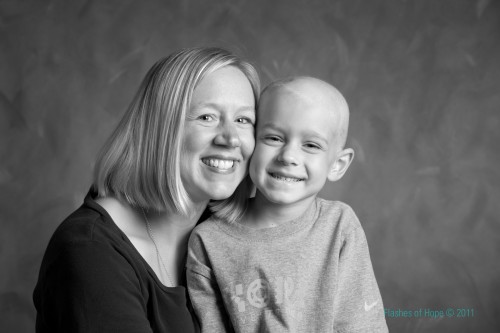
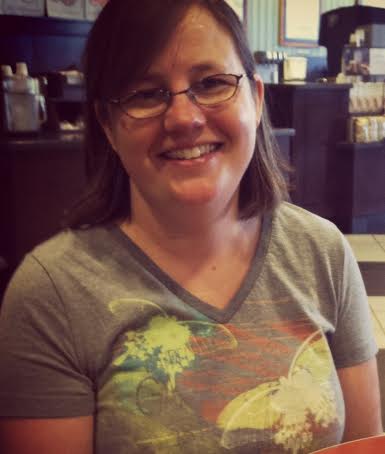
Isaac and Mom
Isaac and Mom

We celebrated.

We had saved the Make a Wish trip that Isaac had been given for after treatment.  In October, 2012 we went to Orlando.  We had never been there before and took it all in – Give Kids the World, Universal Studios and, of course, Disney World.  Isaac’s big brother fought Darth Vadar, our boys made lightsabers, they got Harry Potter wands and we crammed as many magical moments into that week as we could.

We returned home from our trip and got back to “normal” life.  This meant school for Isaac and his older brother and time at home with mom for his younger brother.  It meant that work resumed as usual for Dad and this included frequent travel.  We were busy and we were grateful.

Eight days after we arrived home from our Make a Wish trip Isaac began to complain of pain in his spine.  He had difficulty walking and frantic phone calls were made to his doctors.  The morning that he had a scan scheduled he woke up and couldn’t move his legs.  Before we even got in the car that day, I knew.  I knew the cancer was back.  I knew it was everywhere.  And I knew it was going to take him.

As the doctor showed me the images of the cancer throughout his body, I looked and her and said, “No.  More.  Pictures.”  I had seen enough. All I wanted to do was get my child home and love him.  He had endured enough.

So that’s what we did.  We made a nest filled with love for our six year old and tried our very best to allow him to die with dignity surrounded by all of the people and things he loved most during the last months of his life.  This meant there were lots and lots of movies (Star Wars, Lord of the Rings, Harry Potter), lots and lots of Legos, a brand new puppy and one last birthday party, when Isaac turned seven.

On March 6, 2013, Isaac squeezed my hand two times and was gone.  He told me once, “My love will never stop flowing.”  And my love for him will never stop flowing either.
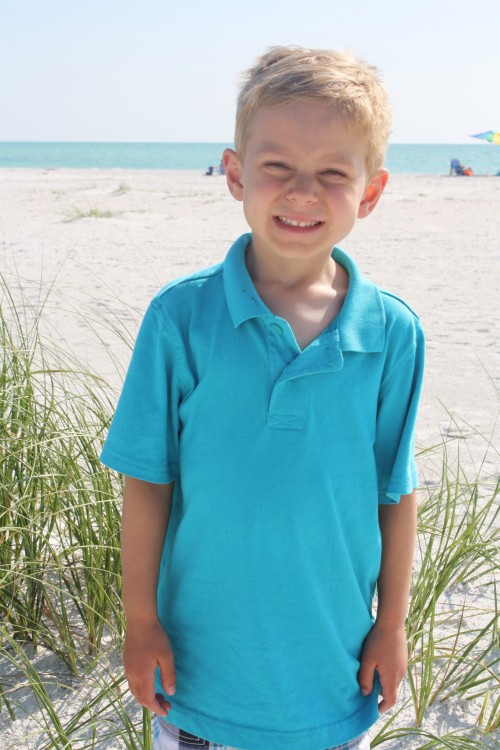
Isaac.
Isaac.

I still picture Isaac as the bright, attentive, inquisitive and beautiful boy that he was.  He was so much more than cancer and remains so much more than a statistic.

Erin’s Story: Being a Childhood Cancer Survivor

September is Childhood Cancer Awareness Month. Each day a different guest blogger will be featured who will generously share their personal experience with childhood cancer.  Stories are always more potent than statistics.  

By Erin Miller

In February 1983, when I was 5 years and 9 months old, my parents heard those words that no one wants to hear, “Your child has cancer.”

The months of unexplained fevers, lethargy, back pain, the hard, large lump my father felt in my left side while giving me a bath, now had an answer. We were sent two hours away to the nearest children’s hospital, which would become a regular part of our lives for so many years. There I had surgery and began a regimen of chemotherapy, and several rounds of radiation therapy for stage III Wilms’ Tumor.

What has it meant to be a childhood cancer survivor over the last thirty-one years?

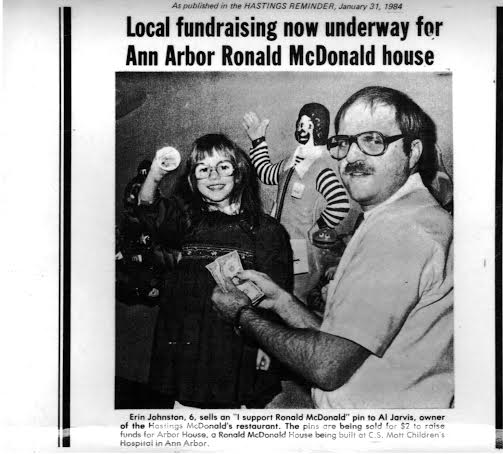
As a child, I didn’t want people to really know, because I felt different. I wanted to be normal. Now, that was something that was rather hard to prevent from happening, considering I lived in a very small Michigan town, where my dad was the editor of the local newspaper. The newspaper ran a story on how we helped raise funds for the first Ronald McDonald House, in Ann Arbor, where I was treated. Everyone already knew.

The author helping to raise funds for a Michigan Ronald McDonald House.

When we moved about an hour away when I was twelve, I thought that would be my chance for no one to know. But, then a daughter of a woman in my mother’s La Leche League group was diagnosed with the same exact cancer. So, of course, my mother shared my story. When my annual follow-up appointments to the clinic would arise, my friends would ask, “Why are you going to the doctor in Ann Arbor?” Explanation soon became matter-of-fact and just a part of who I was.

I realized being a cancer survivor made me unique, so maybe I should embrace it.

When I became a teenager, I began to process the reality that cancer treatment does not always end in survival. I went to church camp the summer after 7th grade grade. A particular Bible passage talked about death, and it was like a light bulb went off in my head. People die from cancer. I could have died. Other kids have died! Why did I live and they didn’t? What was different?  These are questions that don’t ever get answered. I realized that there is such a thing as survivorship guilt.

I went to a music/arts camp after 8th grade and one of the students did a monologue about a girl with leukemia. I will never forget sitting there in the open air auditorium, the tears welling up, my heart palpitating, hands sweating, the beginning of panic setting in as this girl acted out her piece. I had to leave.

My body was reliving its own experience in her words. It was my first experience like that, but not my last over the years. Even now certain things will trigger a physical response in me, most often it is medical-related; such as hospitals or blood draws, but certain smells, words, songs can do it too. I realized the body remembers in ways the mind forgets, especially when you are treated for cancer at such a young age. You sometimes don’t even know how to voice everything.

When I was newly married, in my early twenties, and the realities of the late effects of my treatments began to set in, I began to deal with some anger and depression. My radiation treatments left me with acute ovarian failure. We tried in-vitro fertilization with donor eggs, with my older sister going through the donation process. However, my uterus was also so compromised not one of the three cycles worked. We were told adoption was our best route to a family. Infertility after cancer is hard. I was never angry at my parents for choosing the treatments to have me live, but I was angry at the results. It certainly didn’t seem fair. Not only did I have to go through cancer treatments as a child, but what made me well took away something I longed to experience, pregnancy, motherhood with children that share your traits, your nature. I secretly began to think maybe there was something inherently wrong with me, hence cancer, no pregnancies.

Depression began its insidious takeover in my life. I realized, twenty years after cancer, that its effects were still very much present in my life, physically and emotionally. Depression was an undercurrent in my late twenties/early thirties. My doctor prescribed an antidepressant, which I took faithfully, but I pushed away most attempts at counseling.

My husband and I began the adoption process, choosing domestic adoption. we wanted our child(ren) to have a connection to their birth family and history. We were chosen once after a year of waiting, only to have the mother decide to raise her baby, as was her right. I was devastated, thinking maybe I really am not meant to be a mother at all.

We began our second year of waiting, which also included a litany of family and friends announcing pregnancies. Babies were due left and right. I hid my feelings of sadness, went to baby showers and hospital visits to see new babies. At the end of the second year of waiting, we decided to change adoption agencies. We were chosen the same day we were officially switched! Our daughter was born three weeks later and motherhood became one of the best things that ever happened to me.

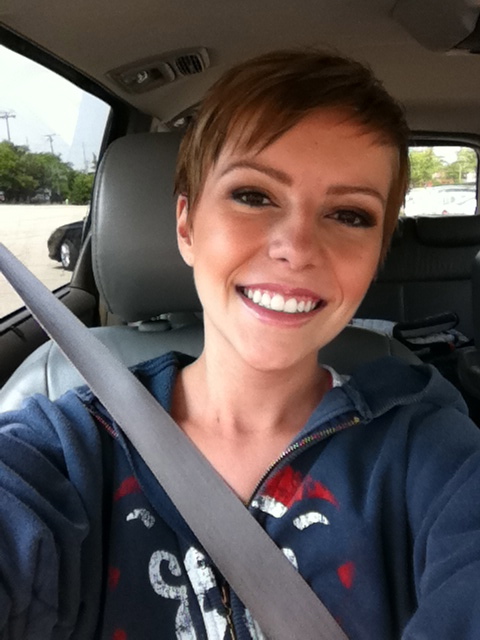
Erin and her family.

It didn’t cure my depression, though. That took a serious turn for the worse when our daughter was a year and a half old, and I finally agreed to counseling. In the midst of counseling, I realized that I had believed, since I was 5, that I had caused all of the pain, anguish, sadness my parents and sisters felt by having cancer, but because I was young and unable to vocalize those words and feelings, I internalized them all for years and years. Those words and feelings became a part of my subconscious, and inside I believed that this made me a bad person.

It took six years of regular counseling to sort through it all, and I realized that nothing I did, or anyone did, caused my cancer to happen. I finally grasped that I am a survivor, not a failure.

We have since adopted a second time, another daughter. The two of them are my whole world and I would do anything for them. I work hard to not overreact to sickness, but then my older daughter went through a series of off and on stomach pain, headaches, leg pain, low grade fevers recently. When our doctor requested blood work, my heart raced and my head swirled with the worst case scenarios. The blood work was normal and a long running virus was the most likely cause. I have realized that motherhood is one of the most wonderful and scariest things as a childhood cancer survivor. You know what the worst could be because it happened to you as a child, and you do not want it to happen to your child.

Now, in my late thirties, I look at my life, I am thankful I am a cancer survivor. It has shaped so much of my life. Yes, it has given me a scar, one kidney, anxiety and depression. But it has also given me more compassion, more empathy, more strength, a recognition that we are given just one life to live, and how we live that life for our faith, our family, ourselves is so important.

September Erin2

I try to use my survivorship as a way to advocate- an area in which I would like to become more involved. As a result of my childhood cancer, I have been able to connect with many others, primarily thanks to social media, who share similar experiences.

Don’t miss a single installment of the 2014 September Series! Subscribe!

Type your email address in the box and click the “create subscription” button. My list is completely spam free, and you can opt out at any time.

Shea’s Story: Coming Home for Good

September is Childhood Cancer Awareness Month. Each day a different guest blogger will be featured who will generously share their personal experience with childhood cancer.  Stories are always more potent than statistics.  

By Liz Anderluh

Life was fairly idyllic before 2008. High school sweethearts, we had three beautiful daughters, a comfortable home, even a cabin near a lake. Oh, there were minor bumps in the road. I’d endured some health issues, a detached retina and a total knee replacement among them. Little did I know that we were in basic training for the journey ahead.

It began in July of that year. Shea, our 14-year-old, complained of trouble swallowing liquids. Her voice was different, too; it was softer, fainter, and just a little raspy. I remember teasing her about it. I never imagined the cause.

September Shea1

Our pediatrician ruled out strep, mono, the usual suspects, then referred us to an ear-nose-throat specialist. His tests revealed the cause of her troubles: one of her vocal cords was paralyzed. That led to the scan that was to determine the cause of the paralysis. Between appointments, Shea went to band camp, marching and playing clarinet for hours in the August heat. She seemed completely healthy, but…

The phone rang on the last day of band camp. The scan showed a large mass wrapped around her windpipe. Given its size and location, we needed to bring her to the hospital immediately. They feared it could block her breathing and that she could die.

Shea was diagnosed with Hodgkins Lymphoma on August 28, 2008. She never made it to her first day of high school. She spent it at Children’s Memorial Hospital in Chicago, having biopsy surgery.

What followed was nearly four years of intensive treatment. Shea spent days on end in the day hospital, getting chemo. Between treatments, she would bounce back, doing her best to make it to school. Or, she’d spike a fever, and she’d land in the hospital, inpatient. She played clarinet in some halftime shows. She went to the Homecoming dance. She made it through the first chemo regimen, the protocol that puts most Hodgkins patients into remission. But her PET scan still lit up; the mass was smaller, but still active. She began 2009 receiving radiation, her head bolted to the table. She was brave. She returned to school. She joined the badminton team and ended the season third in state. She was named most improved freshman in the band.

The next PET lit up, too; our doctor attributed it to the radiation causing a false positive. In hindsight, now we know that the treatments hadn’t worked. In May of 2009, she complained of itching; soon after, she mentioned night sweats. Both “B” symptoms of HL. Another PET was scheduled, in June; by then, the cancer had metastasized in her lungs, and she was staged 4B.

Many chemo regimens were tried, but it was an experimental treatment, SGN-35, that got her into remission. Her months on that medicine were among her best, with infusions once every three weeks, minimal side effects, and lots of time to get to school, which was her sanctuary, the place where she could just be normal. Meanwhile, she prepared for a stem cell transplant using her own cells. When it finally occurred, she sailed through it, as strong as ever. We had so much hope! We didn’t know that the worst was still ahead… soon after transplant, she relapsed, and her only hope was a stem cell transplant using donor cells.

While a matching donor was sought, we splurged on spring break in Hawaii, and later, Shea attended junior prom; she was radiant. Just a week later, she received the stem cell transplant, using cells from a donor in Germany. We marveled. We hoped.

But Shea contracted mono post-transplant, in July of 2011.

And the mono (caused by the Epstein-Barr virus) morphed into EBV-PTLD (EBV-Post-Transplant Lymphoproliferative Disease). The EBV cells were acting like cancer cells, forming lesions in her body. And for the first time in her journey, Shea didn’t bounce back between treatments. She became more and more sick, in spite of experimental t-cell therapy in New York City, where she and her dad lived for several months. She lost weight. Her throat was damaged by the EBV, and she couldn’t eat. She got a feeding tube and we learned how to prepare and clean and administer the thin gruel that kept her alive. She became so weak that she couldn’t walk more than a few steps. The painful neuropathy in her hands and feet kept her restricted to her comfy chair, unable to draw, or write, or play guitar or video games… her favorite pastimes. The t-cell therapy wasn’t working. She came home for good.

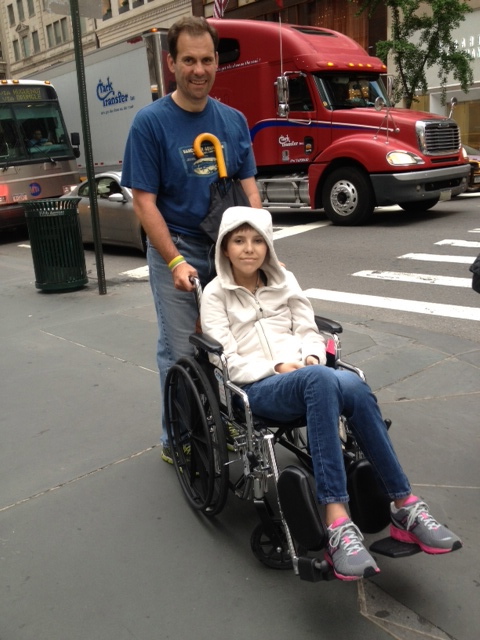
September Shea2

Shea died early the morning of July 25, 2012, in her sleep, in a hospital bed in our family room. Her dad and I slept on the couch beside her. Her sisters slept upstairs. It was peaceful; it was so, so painful. It still is.

Cancer stole my child. Rest in peace, Shea. She was 18.

Shea was Donna’s last hospital roommate at Children’s Memorial Hospital, in July 2009.  We were so very fond of her.